The global crop protection industry has a structural problem that is becoming impossible to ignore. Decades of intensive monoculture and the over-application of synthetic pesticides have pushed pests to evolve resistance at a pace that legacy chemical formulations cannot keep up with. Regulatory agencies across major export markets are tightening the rules on synthetic residues faster than the agrochemical industry can develop replacements. And the pipeline of new chemical molecules is thinning, not growing. In 2024, the European Union rejected over 1,200 Brazilian agricultural consignments solely due to chemical residue traces.
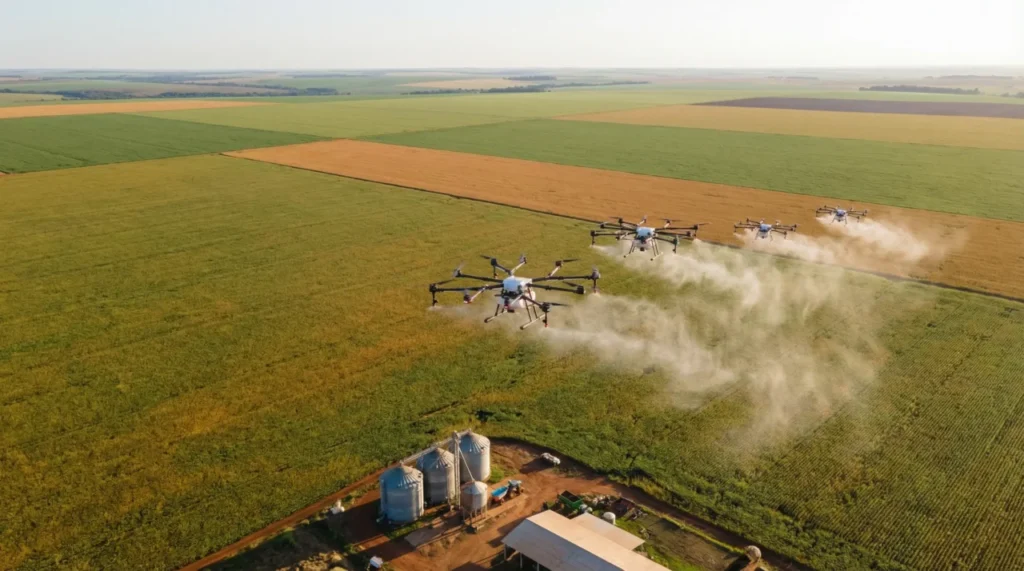
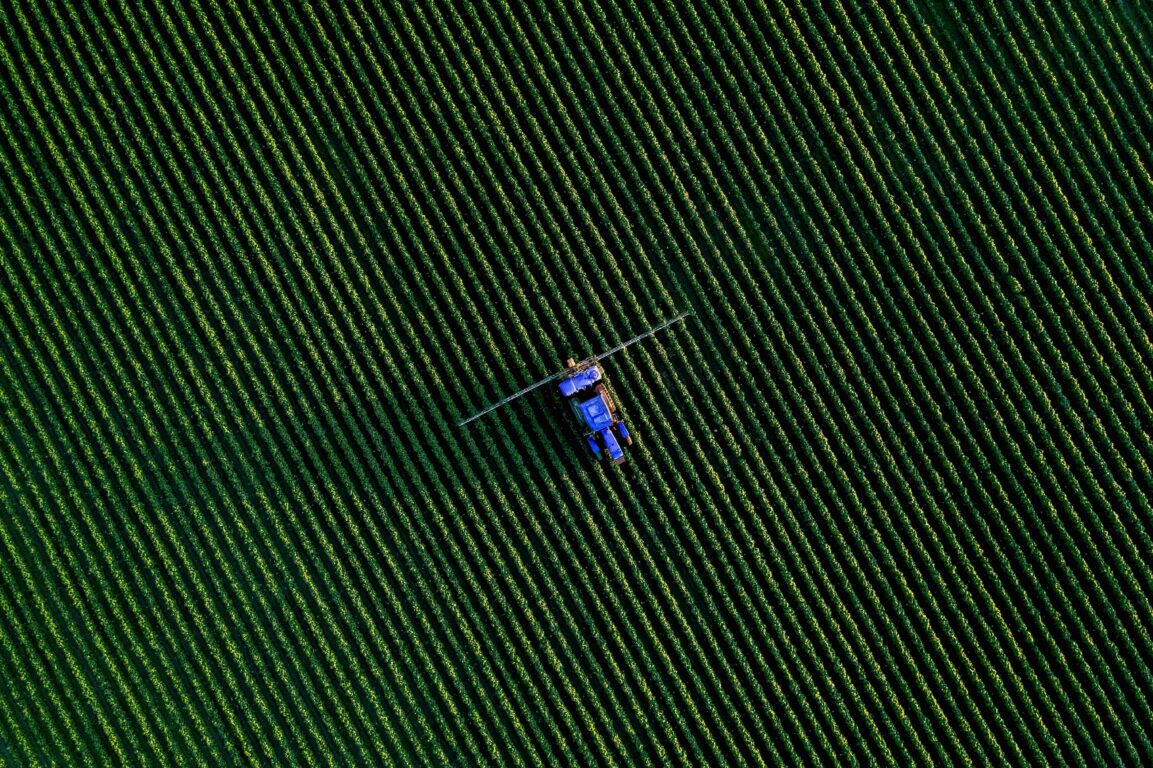
Drone application is reshaping how biological crop inputs are delivered across Brazilian farmland, enabling precise, ultra-low-volume spraying that preserves the viability of live microbial and macrobiological solutions at commercial scale.
The industry that has gone furthest toward solving this problem is not in Northern California or Switzerland. It is in Brazil. And it did not get there because of a sustainability mandate. It got there because it had no other choice.
I recently spoke with Francisco “Chico” Jardim, General Partner at SP Ventures, whose firm has been investing in Brazilian agricultural biologics since its earliest portfolio companies in 2009. Jardim’s thesis is that tropical agriculture, precisely because of its extreme biological pressure and rich native biodiversity, has become the global innovation epicenter for nature-based crop science. What was once a local necessity is becoming a global export.
The Chemical Cliff Brazil Hit First
To understand why Brazil leads in biological crop protection, you need to understand the specific way tropical agriculture destroys chemical solutions.
In temperate farming environments, a hard winter freeze kills overwintering pest populations, resetting the biological baseline each season. Insects in these climates may complete two or three generations per year. In tropical Brazil, there is no such reset. Pests breed continuously, completing far more reproductive cycles annually. Because genetic mutations accumulate with each successive generation, resistance to chemical active ingredients evolves dramatically faster. Research has documented that pesticide resistance levels can be up to 158 times higher in warm overwintering sites compared to those with seasonal die-offs.
The practical consequence is that chemical solutions that provide years of reliable control in North America or Europe may lose their effectiveness in three to five years in Brazilian conditions. As Jardim described it, Brazil became known among the major global chemical companies as the “graveyard of chemical technologies for agriculture.” Farmers found themselves on a pesticide treadmill, applying higher doses of increasingly toxic formulations to control super-pests that had already adapted, requiring entirely new product categories on an accelerating timeline.
The Brazilian chemical crop protection market today is valued at between USD 32.1 billion and USD 36.1 billion, spanning insecticides, herbicides, and fungicides. The size of that market reflects both the scale of Brazilian agriculture and the intensity of its pest management challenge. What the biological industry is now attacking is not a fringe segment of that market but its structural core.
From Sugarcane Fields to Global Science
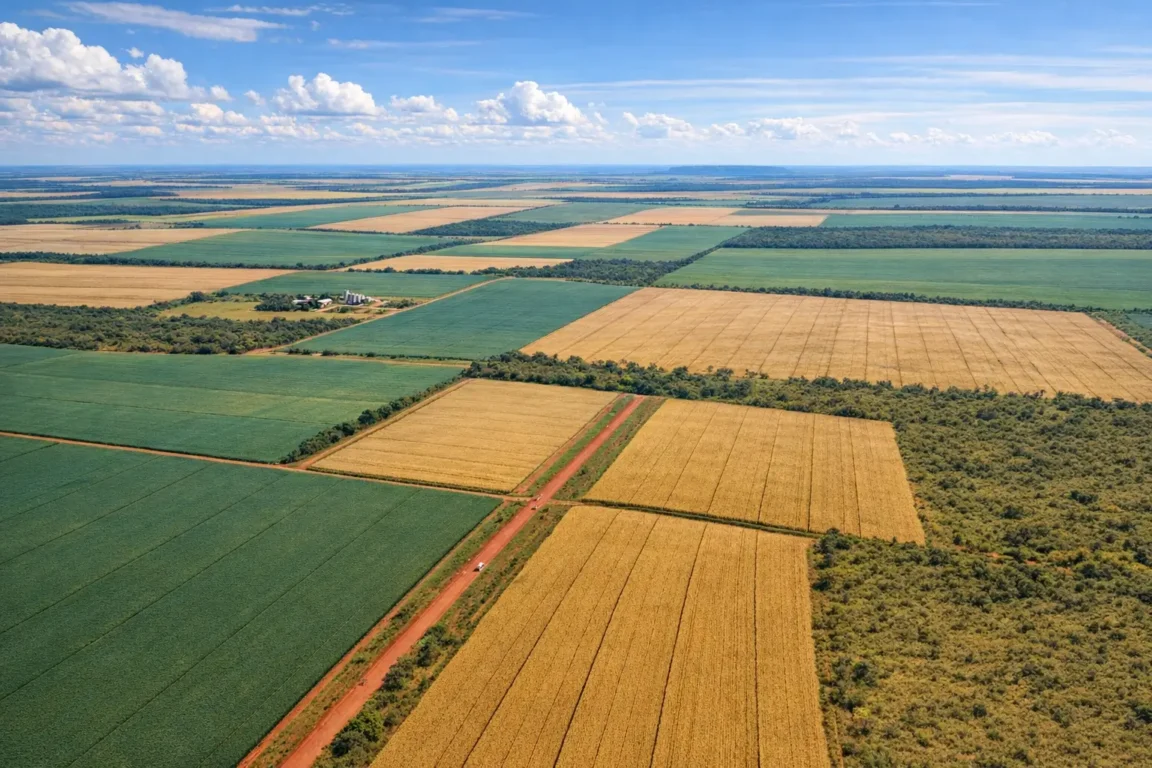
Brazil’s biological crop protection industry did not emerge from a laboratory or a policy mandate. It was engineered at farm scale, starting in sugarcane fields in the 1970s and 1980s, driven by farmers and researchers who understood that restoring some version of nature’s pest equilibrium was the only long-term solution to the biological pressures of tropical production.
Before large-scale monoculture, natural predator-prey relationships kept pest populations in check. When forests were cleared and monocrops introduced, farmers provided abundant food for pests while eliminating the natural predators that had controlled them. The Brazilian response, pioneered at institutions like ESALQ, the Luiz de Queiroz College of Agriculture at the University of São Paulo, was to identify those natural predators, develop the technology to produce them at industrial scale, and deploy them across commercial farmland.
The first major success was the use of a parasitic wasp to control the sugarcane borer, a caterpillar that had become a severe and chemically resistant threat to one of Brazil’s most important crops. The wasp parasitized the eggs of the borer, preventing reproduction and gradually reducing the pest population without a single gram of synthetic chemical. That biological control model eventually became the foundation for Brazil’s biologics industry across soybean, corn, and cotton.
Jardim’s earliest fund investment in this space, a company called Bug out of the University of São Paulo in Piracicaba in 2009, was built directly on this model. Bug was eventually acquired in 2015 by Koppert, then one of the world’s largest biological crop protection companies, in what became one of the defining validation moments for the Brazilian biologics thesis.
Today, Brazil’s agricultural biologicals market is valued at USD 833 million in 2025 and is forecast to reach USD 1.25 billion by 2030, compounding at approximately 8.4% to 9.3% annually. Brazil alone accounts for over 20% of the entire global growth in the biocontrol sector. Globally, the agricultural biologicals market was valued at between USD 17.2 billion and USD 18.4 billion in 2024 and is projected to reach between USD 35 billion and USD 57.8 billion by 2030 to 2034, compounding at 13.7% to 14.5% annually.
In 2025 alone, Brazil registered a record 139 new biological products, with microbiological agents accounting for 87% of approvals.
The Fertilizer Import Crisis That Accelerated Everything

Brazil imports approximately 85% of its synthetic fertilizers, with nearly a third previously sourced from Russia and Belarus before the Ukraine war exposed the full fragility of that supply chain and accelerated the shift toward biological alternatives.
While the biological crop protection story is well established in Brazil, the more recent and perhaps more consequential expansion is happening in plant nutrition. The story behind it begins with a supply chain shock.
Brazil imports approximately 85% of its total fertilizer consumption, making it the world’s largest importer of agricultural nutrients. In 2024, Brazil imported 44 million tons of NPK complexes, resulting in a USD 13.2 billion trade deficit in fertilizers alone. Prior to the Russia-Ukraine conflict that began in 2022, between 30% and 41% of Brazil’s fertilizer imports originated from Russia and Belarus. When the war erupted and international sanctions were imposed, global prices for urea and potash spiked by more than 100% almost overnight. Because fertilizer accounts for approximately 23% of total operating costs for Brazilian soy and corn farmers, this external shock exposed a critical strategic vulnerability.
The biological response to that vulnerability is already underway. Specific bacteria, applied as soil treatments or seed coatings, form symbiotic relationships with crop root systems, fixing atmospheric nitrogen into bioavailable forms and solubilizing soil phosphorus that plants could not otherwise absorb. These microbial inoculants allow farmers to dramatically reduce their purchases of synthetic NPK fertilizers without sacrificing yield. Crop nutrition now represents 59.2% of the Brazilian agricultural biologicals market revenue, making it the dominant sub-segment. Some of Jardim’s portfolio companies are conducting R&D partnerships with major agribusiness corporations to substitute up to 40% of nitrogen fertilizer application with biological alternatives within a three-year horizon.
Corporate Giants Are Buying What Brazil Built
One of the most important structural signals confirming the biologics thesis is the acquisition activity of the global agribusiness incumbents. Companies that spent decades resisting biological alternatives are now paying significant premiums to acquire the capabilities they failed to build organically.
Syngenta acquired Valagro, a specialist biostimulants company, for approximately EUR 600 million. Corteva Agriscience acquired both Symborg and Stoller, focused on microbials and biostimulants respectively. FMC acquired Biophero, a pheromone-based pest control company, for USD 200 million. BASF and Bayer have each established extensive biocontrol partnerships and pipeline investments across multiple platforms.
As Jardim explained in our conversation, this dynamic creates a structural exit pathway for Brazilian biologics startups that is largely absent in other emerging market technology sectors. The major global agribusiness players have large Brazilian operations, need local biological solutions that cannot be developed elsewhere, and are willing to pay acquisition prices that deliver real venture returns.
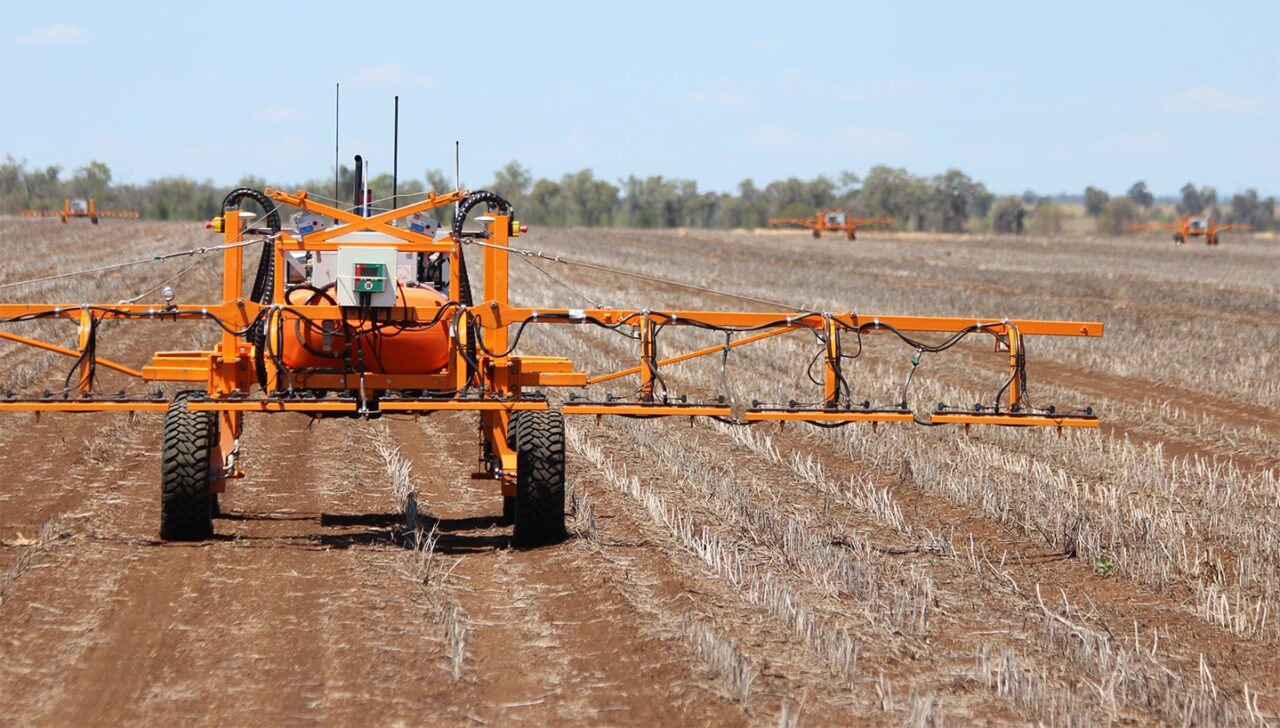
The delivery technology for these products is also evolving rapidly. Drone application of biological inputs is scaling quickly in Brazil, allowing high-precision, ultra-low-volume applications that protect the viability of live microbial and macrobiological solutions while reducing operational costs by up to 70% compared to manual spraying in some crop categories.
Why This Market Is Bigger Than Most Investors Realize
The structural advantage underlying all of this is biodiversity. Tropical ecosystems, specifically the Amazon basin and the Atlantic Forest, house the highest concentrations of biological diversity on earth. Within these complex, hyper-competitive soils, millions of uncatalogued microbial species have engaged in an evolutionary arms race for millennia, developing highly complex biochemical defense mechanisms. Isolating fungal, bacterial, and viral strains from these high-stress environments yields biological control agents that are inherently more robust and lethal to agricultural pests than strains cultivated in sterile temperate laboratories.
Brazil is therefore not just the largest current market for agricultural biologics. It is the world’s most productive natural library for discovering the next generation of biological crop science. As Jardim described the dynamic, the same biodiversity that drives extreme pest pressure also contains the nature-based solutions to manage it. That alignment of problem and resource in a single geography, supported by world-class agronomy research institutions and an increasingly favorable regulatory environment, is what makes this more than a regional story.
For global investors tracking the transition from synthetic to biological inputs in food production, Brazil is not a future opportunity. It is the market where that transition is already happening at scale, and where the companies that will eventually define global biological agriculture are being built right now.
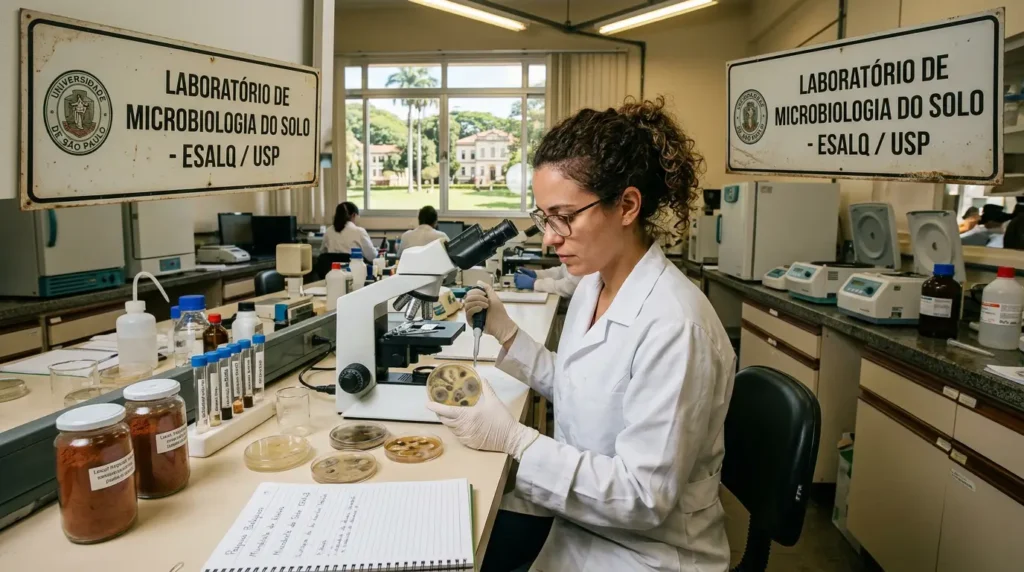
Much of Brazil’s biological crop science originates in university research facilities like ESALQ/USP in Piracicaba, where the foundational work on parasitic wasps, microbial inoculants, and natural predator systems first moved from laboratory to commercial scale.
Listen to the full conversation with Francisco Jardim on the SRI 360 podcast.
For more interviews with leading voices in sustainable and responsible investing, visit the SRI 360 podcast archive.