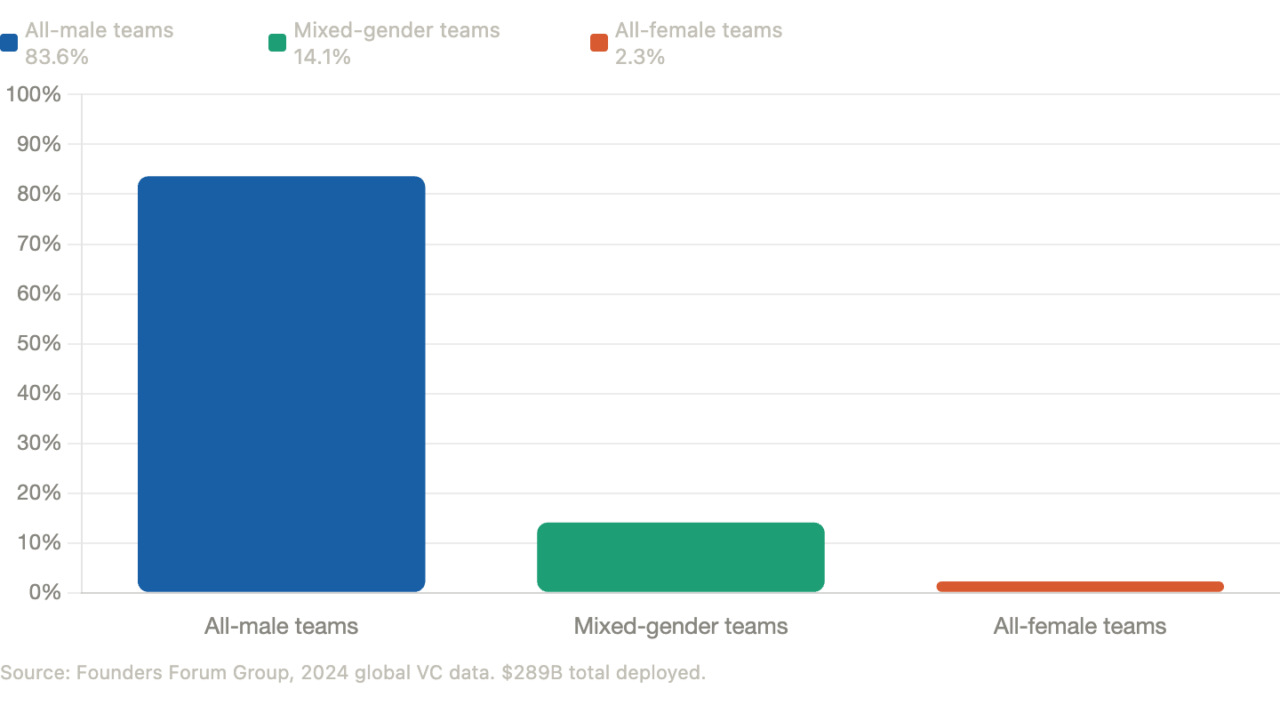
In 2008, roughly 14% of Egyptian adults held a bank account. By the end of 2025, that number had reached 77.6%, representing 54.7 million citizens with active transaction accounts, a growth rate of 219% since 2016, according to the Central Bank of Egypt’s own figures as reported by Daily News Egypt. That kind of trajectory catches investor attention. What it obscures is how hard, messy, and counterintuitive the path was, and why the companies that actually drove that shift look nothing like what Silicon Valley would have built.
I recently spoke with Mohamed Okasha, co-founder of Fawry and founding partner of DisrupTech Ventures, about what financial inclusion actually requires in a frontier market. His read is precise and worth sitting with, because it contradicts most of what gets written in the glossy impact investing reports.
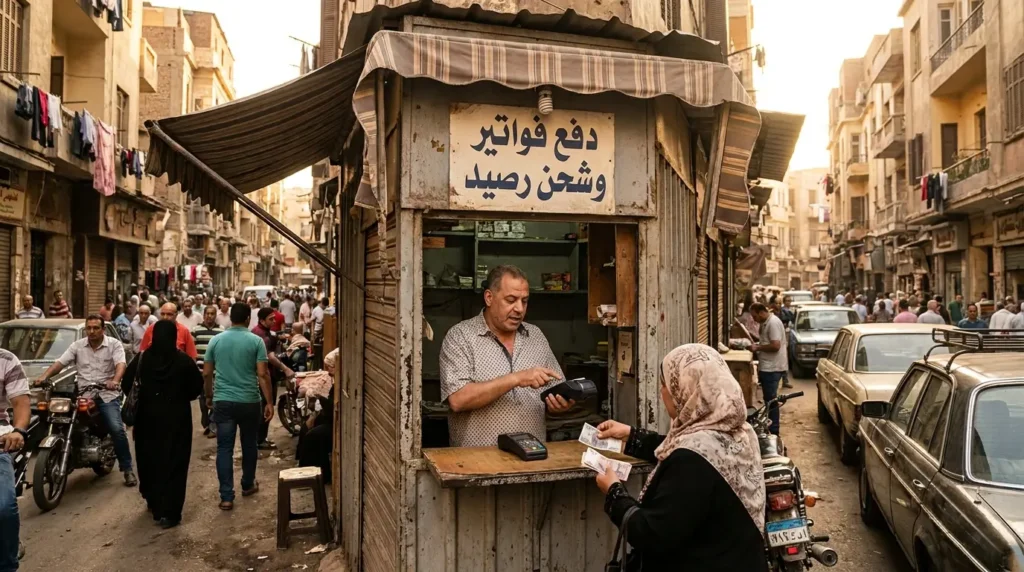
Fawry’s corner-kiosk network turned everyday retail counters into transaction endpoints, building the physical trust that made digital payments viable across a cash-first economy.
The Cash Problem That Digital-First Models Keep Getting Wrong
When Fawry launched, Egypt was one of the world’s most cash-dependent economies. The challenge was not simply that people lacked bank accounts. It was that the entire infrastructure of daily economic life, paying for electricity, settling phone bills, buying grocery staples, was organized around physical cash changing hands at the corner shop.
Purely digital rollouts tend to fail in these environments for a reason that is structural, not behavioral. Trust takes time to build, and it gets built through physical touchpoints. In Fawry’s early years, customers would pay at a kiosk and then immediately call the utility company’s call center to confirm the money had actually arrived. That double-checking behavior went on for roughly three years before the habit eroded. Research from Women’s World Banking on Wema Bank’s ALAT HUB model makes the same observation in a different geography: physical retail points function as trust anchors, helping overcome consumer hesitation that purely digital channels cannot address.
What Fawry built was architecturally different from what most fintech investors picture. It was not a mobile wallet. It was not M-Pesa. It was a merchant network, a physical infrastructure of corner kiosks equipped with point-of-sale terminals, each acting as a transaction endpoint connected to a digital backend that updated billers in real time. The kiosk owner collected cash. The backend processed the payment instantly. Customers got a printed receipt. The design solved the trust problem before it demanded a behavior change.
Compare that to Kenya’s M-Pesa, which runs on telecommunications rails through Safaricom’s agent network and requires mobile phone registration, or India’s Business Correspondent model, which depends on biometric Aadhaar identification and state-backed banking architecture. Both are credible, effective systems in their own contexts. Egypt had neither the telco infrastructure dominance nor the national biometric stack. What it had was 300,000-plus corner kiosks that people already trusted for mobile top-ups.
Fawry threaded that needle. And because it was built on top of something familiar, the transition from cash top-up to bill payment to eventually airline ticket purchase happened gradually, over years, without forcing a behavioral leap.
How the Hybrid Model Actually Works at Scale
The numbers now are worth examining, because they tell a different story than the founding narrative.
In FY2024, Fawry processed 1.93 billion transactions, generated EGP 5.5 billion in revenue (a 68.4% year-on-year increase), and posted an EBITDA margin of 49.9%, per its FY2024 earnings release. For the full year 2025, the network served 54.8 million monthly active customers across more than 377,000 agents and POS terminals, and processed 2.08 billion transactions, up 7.7% from 2024, per Fawry’s FY2025 earnings release.
But the more telling metric is the revenue mix. Banking Services, which folds in agent banking and payment acceptance, grew 52% year-on-year and now accounts for 40.6% of total revenue. Financial Services, covering micro-lending, consumer finance, prepaid cards, and the money market fund, surged 135% year-on-year and represents 27.5% of total revenue. Alternative Digital Payments, the original bill-payment business, grew a comparatively modest 17.6% and now makes up just 23.2% of revenue. What started as a bill-payment kiosk network has become a financial services platform. The physical infrastructure was never the destination. It was the on-ramp.
Keeping “one leg in the physical world and one leg in the digital world” is not a hedge. It reflects a deliberate read of how behavioral change works in a market where the informal sector represents roughly 67% of total national employment, where even in Q2 2025, cash withdrawals still constituted 79% of all transaction outflows from mobile wallets, according to Daily News Egypt reporting on NTRA data.
You can have 46 million active mobile wallets and still have a primarily cash economy. Those two things coexist without contradiction in a country at Egypt’s stage of transition.
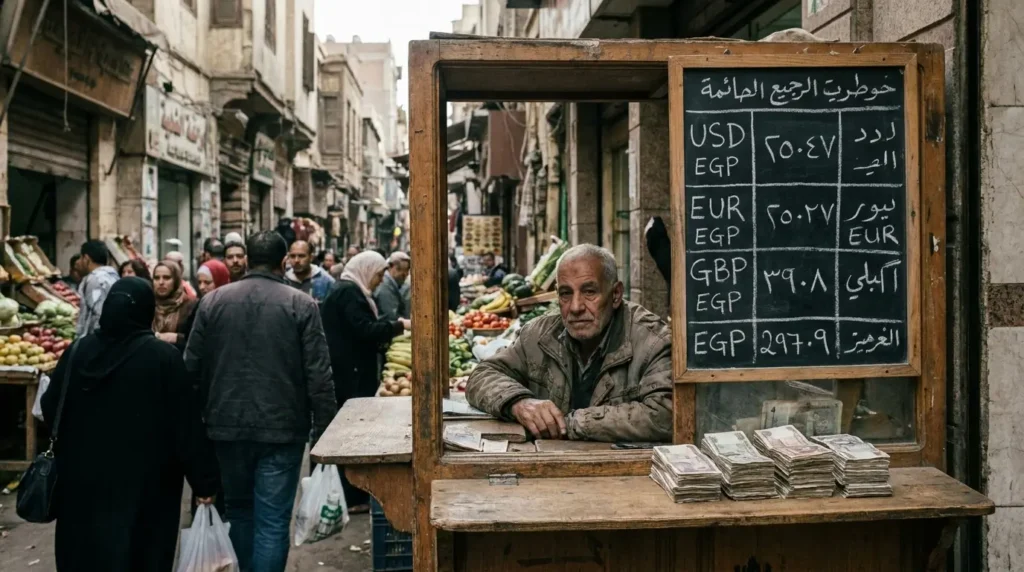
Even as account penetration surged, repeated currency devaluations and inflation quietly eroded Egyptian households’ real purchasing power over the same decade.
The Macro Weight That No Fintech Dashboard Shows You
Egypt went from roughly 14% banking penetration to 75% in a decade. That sounds like a success story. At the same time, real wages in Egypt fell somewhere between 50% and 70% in US dollar terms across that same decade.
Both numbers are real. Sovereign Africa Ratings documents that GDP per capita dropped from $4,587 in 2022 to $3,570 in 2024 following the third major currency devaluation. The Egyptian pound has lost approximately 70% of its value against the US dollar since COVID-19, with devaluations in 2016, 2022, and 2024. BNP Paribas research documents inflation peaking at 38% in September 2023.
So what exactly did expanded financial access accomplish in that context?
The answer is that even in a compressed-income environment, the structure of financial service costs matters. When formal channels charge a fraction of what informal moneylenders and cash-handling middlemen charge low-income users, expanding access does real work, even if the macro environment is brutal. Reducing the cost of financial access in a period of income compression is not a consolation prize. It is a material change in household economics.
That distinction matters for how investors frame impact in frontier markets. Financial inclusion numbers that ignore the cost structure of access are not telling the full story. Inclusion at punishing rates is not the same thing as inclusion on reasonable terms.
Why the Cost of Serving the Poor Is Structurally Broken
CGAP, the financial inclusion research group housed at the World Bank, has documented this cost paradox in depth. Physical delivery of cash and in-person service is expensive to sustain in remote or lower-income markets, since branch infrastructure, compliance, and customer support do not scale down cleanly with account size or transaction value. CGAP’s own framing of the problem is direct: serving poor customers in remote areas is inconvenient for the customer, who may have to travel hours to reach a bank, and expensive for the provider, who lacks the infrastructure to reach them efficiently.
Banks respond rationally to that cost structure by imposing minimum balance requirements, higher fees, and elevated interest rates on lower-balance customers. And it explains why informal lenders persist even after formal alternatives arrive: the formal alternatives often remain too expensive at the margin that matters.
This is the real opportunity that fintech addresses in Egypt. Digital payment rails and agent networks lower the per-transaction cost dramatically compared to maintaining physical branches. When the infrastructure is cheaper to operate, the economics of serving low-income customers change. Not because anyone is being altruistic, but because the math finally works.
Fawry’s Ramadan charity donation campaign illustrates this directly. By waiving transaction fees on charitable donations made through its platform and asking NGOs to mention Fawry in their TV advertising, the company built brand awareness at near-zero cost while demonstrating that its infrastructure could serve public-good purposes. It was a smart move that also happened to introduce millions of Egyptians to digital payments through a transaction they already trusted emotionally.
What This Means for Investors Allocating to Frontier Fintech
The Egypt fintech story carries a few things that most emerging market narratives skip over.
Physical infrastructure is not a backward compromise pending digital maturity. It is often the mechanism by which digital adoption becomes possible. Investors who screen out companies with agent networks or hybrid physical-digital models in favor of purely app-based platforms may be applying a Silicon Valley filter to a problem that does not look like Silicon Valley.
The inclusion metric and the income metric are also not the same thing. Growing financial account penetration during a period of real wage compression is not evidence of a broken model, but it is evidence of a complicated one. Impact-focused investors need frameworks that account for both access and cost-of-access, not just headline penetration rates. And the trust-building timeline in these markets is long. Fawry spent roughly three years building enough consumer confidence to reduce post-payment verification calls, a pace that demands patient capital from fund managers accustomed to measuring progress in quarters.
The 2025 Africa Tech Venture Capital Report from Partech noted a shift toward capital efficiency and sustainable unit economics across African fintech in the post-2022 period, with investors increasingly rewarding companies that demonstrate cash discipline over pure growth. The playbook of growing conservatively during macro turmoil, keeping costs lean, and expanding when competitors pause looks increasingly like the right template for what durable fintech infrastructure requires in these markets.
None of that is a coincidence. It is what a decade of building in chaos tends to teach you.
Listen to the full conversation with Mohamed Okasha on the SRI 360 podcast. For more articles and insights on sustainable and responsible investing, visit sri360.com.