Carbon emissions have been the primary language of sustainable investing for most of the past decade. They are measurable, increasingly reported, and serve as a reasonable proxy for regulatory and physical climate risk. But the carbon frame is getting strained. A growing set of risks, from the energy and water demands of artificial intelligence (AI) to freshwater scarcity, biodiversity loss, and the social disruption of industrial transition, is forcing a reckoning with how much institutional portfolios are actually pricing in.
I recently spoke with Jamie Friedland, sustainability analyst at AXA Investment Managers, about where he sees the field heading. His answer was more candid than most. Power is going to be a big one. And water, he said, is a “tremendous, often underconsidered” risk that he thinks about seriously.
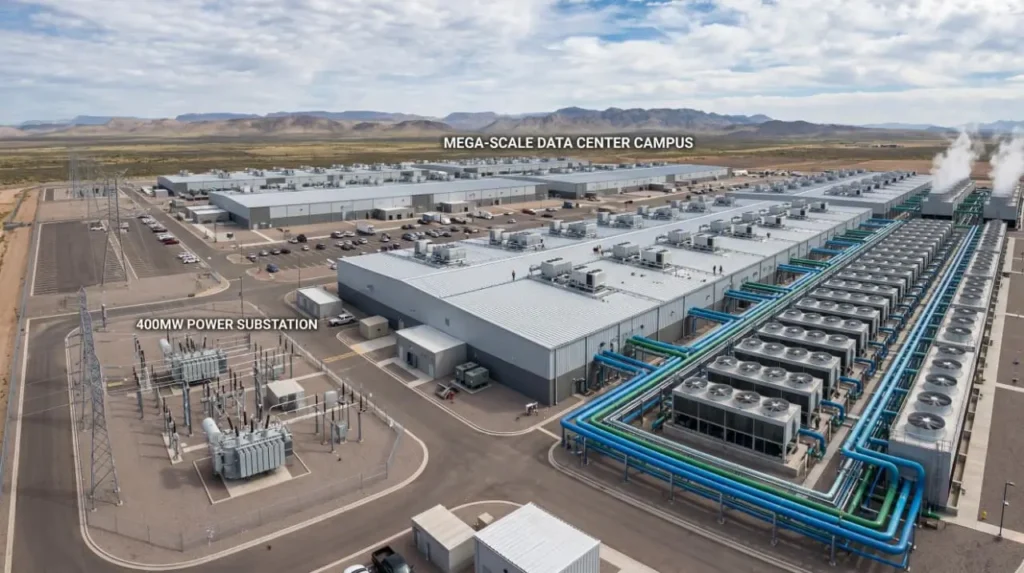
AI data centers consumed 17% more electricity globally in 2025, with AI-specific facilities seeing a 50% surge in power demand, according to the International Energy Agency (IEA).
The Carbon Frame Is Not Wide Enough
Emissions data remains the most tractable metric in ESG investing. More companies report it than almost any other sustainability indicator. It can be aggregated across portfolios, benchmarked, and trended year over year. For these reasons, it dominates both internal KPIs and external reporting at most large asset managers.
But what is happening in the technology sector is exposing the limits of a carbon-only frame. The explosive growth of AI has introduced energy and resource demands that were not modeled into most corporate sustainability commitments made before 2022. The companies most publicly committed to net-zero targets are, in several cases, the same ones now quietly walking those commitments back because of AI.
AI and the Energy Reckoning
The numbers from the International Energy Agency (IEA) are striking. In 2025, global electricity demand from data centers grew by 17%, but power consumption from AI-focused facilities specifically surged by 50%, according to IEA analysis on energy and AI. The IEA projects that data center electricity consumption could climb above 1,000 terawatt-hours (TWh) by 2026, roughly equivalent to Japan’s entire national electricity demand.
The corporate consequences have been tangible. Google’s environmental reporting revealed a 48% increase in greenhouse gas (GHG) emissions over five years, driven primarily by data center expansion. The company subsequently removed explicit references to its “net zero by 2030” goal from its main sustainability webpage, according to Fast Company. Microsoft has acknowledged that AI data center expansion is actively endangering its carbon negative target for 2030, according to reporting in The Guardian. Amazon has cited AI scaling as the primary obstacle to maintaining its sustainability trajectory.
Some tech companies have gone further, signing contracts with natural gas utilities or delaying coal plant retirements to guarantee baseload power for new AI facilities, according to DeepLearning.AI reporting on environmental strain.
For institutional investors who hold these companies within ESG or Article 8 strategies, this creates a real problem. Companies that previously scored well on decarbonization metrics are now moving in the wrong direction, and the reversal is structural, not temporary. Scoring systems built on historical emissions trajectories are going to be slower to reflect this than the underlying business reality.
Friedland’s view is that forward-looking qualitative assessments matter precisely because of situations like this. AXA uses a proprietary color-coding system to assess companies on their decarbonization alignment, running from red (no meaningful commitments) through orange (progressing but not there) to various shades of blue (aligning with or achieving net zero). This kind of assessment can incorporate strategic signals, including public statements from corporate leadership about AI expansion plans, that historical data alone would miss.
The Water Problem Nobody Is Watching
Energy demand gets the headlines. Water is the quieter problem, and potentially the more intractable one.
Modern hyperscale data centers can consume between 300,000 and 1,000,000 gallons of water per day during warm weather to manage the thermal loads generated by densely packed AI servers, according to data center cooling research from Ocolo. Unlike electricity consumption, that water is largely evaporated and permanently removed from the local watershed. It does not return.
Research into specific AI model training runs illustrates the scale. Independent estimates suggest that cooling the servers during training of a single advanced model consumed approximately 198 million gallons of water, an amount comparable to the annual irrigation needs of a square mile of farmland. At the user level, each conversational AI query consumes a small but non-trivial amount of water, which aggregates to billions of gallons annually across global user bases, according to analysis published by Undark.
This intersects with a global freshwater situation that is already under severe stress. According to the World Resources Institute’s (WRI) Aqueduct framework, 25 countries housing roughly one-quarter of the global population currently face extremely high water stress annually, meaning they regularly withdraw almost their entire available renewable water supply. More than 4 billion people experience highly water-stressed conditions for at least one month each year.
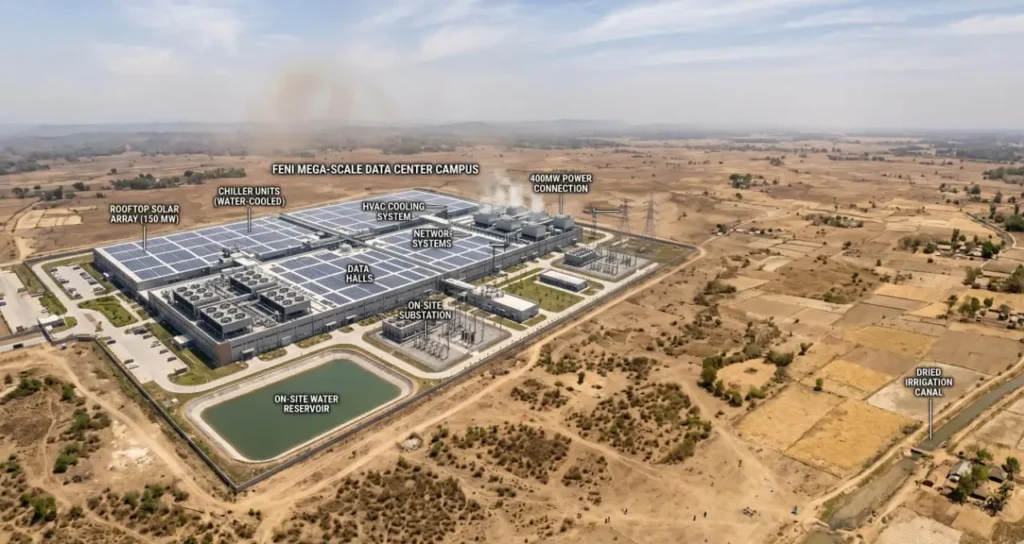
Over 4 billion people experience water stress for at least one month each year, according to the World Resources Institute. AI data centers are increasingly sited in regions already under water pressure, creating a compounding risk for local communities and operations.
What Taiwan Taught Investors About Supply Chain Risk
The abstract risk of water stress became very concrete during the 2021 Taiwan drought. Taiwan is home to TSMC, the world’s dominant semiconductor manufacturer, which fabricates the chips that power the majority of the world’s AI systems. Semiconductor manufacturing requires ultra-pure water in massive volumes. The 2021 drought, Taiwan’s worst since 1964, forced TSMC to ship water by truck to maintain production levels, according to Swiss Re’s corporate risk analysis.
The incident exposed something most investors had not modeled: that the global technology supply chain, including the infrastructure required to run AI at scale, has a hard physical dependency on freshwater access in specific, often water-stressed geographies.
TSMC has since committed to becoming “Water Positive” through investment in reclaimed water technology and groundwater restoration, according to TSMC’s ESG reporting. But that is one company responding to one visible crisis. Most technology supply chains have not undergone this level of water risk assessment.
Institutional investors are beginning to use frameworks from CDP (formerly the Carbon Disclosure Project) and the Ceres Valuing Water Finance Initiative to map these risks. A 2023 Ceres benchmark evaluation of 72 major water-intensive companies found significant deficiencies: companies frequently set water quantity targets without accounting for the specific watershed conditions where they operate, overlook water quality metrics entirely, fail to assess upstream supply chain water risks, and lack meaningful board-level oversight over water pricing and valuation, according to the Ceres benchmark report.
The gap between where water risk disclosure is today and where energy risk disclosure was a decade ago is large. For patient, long-horizon investors, that gap is also where opportunity tends to live.
Biodiversity and the Blue Economy
Carbon and water are two dimensions of a broader systemic risk picture that is starting to formalize into investable frameworks. Biodiversity loss, long treated as an ethical concern rather than a financial one, is gaining structure through the Taskforce on Nature-related Financial Disclosures (TNFD). Modeled on the Task Force on Climate-related Financial Disclosures (TCFD), which drove the mainstreaming of climate risk disclosure among corporations, the TNFD establishes a four-pillar framework covering Governance, Strategy, Risk and Impact Management, and Metrics and Targets. It asks companies to report on their dependencies and impacts on nature, not just their carbon footprint, according to the TNFD recommendations.
Friedland specifically called out biodiversity as “the next topic coming down the pipe” in sustainable investing, following water. The sequencing matters: emissions first, then water, then biodiversity. Each expansion of the ESG framework represents a new category of previously unpriced risk entering the investment calculus.
One financial instrument that directly captures this shift is the blue bond. Blue bonds function similarly to green bonds but channel proceeds specifically toward marine biodiversity conservation, sustainable fisheries, and clean water infrastructure, aligning with United Nations Sustainable Development Goals (UN SDGs) 6 and 14. The global blue bond market surpassed 13 billion euros in cumulative issuance between 2018 and 2023, according to BNP Paribas research on the blue bond market. Friedland mentioned blue bonds specifically as an example of the kind of thematic niche instrument that better data will continue to enable. Investors who know what they want to target can now find instruments that match those objectives with increasing precision.
The Just Transition: A Social Dimension That Cannot Be Outsourced
Climate transition is not only an environmental story. It carries significant social consequences that institutional investors are increasingly expected to consider.
The International Labour Organization (ILO) defines the just transition as the need to ensure that the shift to a low-carbon economy is executed in a way that is fair and inclusive, creating decent work opportunities and leaving no community behind, according to ILO guidance on just transition.
Friedland framed this both nationally and globally. Within countries, the just transition means that if a coal plant is the economic foundation of a community, closing it without providing alternative opportunities for workers and residents is not a success story for sustainable investing. It is a social harm. Globally, the just transition raises harder questions about which countries bear the cost of decarbonization and who gets left behind by the speed of the energy transition.
For institutional investors, this is not abstract. Portfolios concentrated in decarbonizing sectors face real exposure to the social and political backlash that can accompany rapid transition if the human cost is not accounted for. Regulatory risk, social license to operate, and community opposition to specific projects are all financial factors that the just transition framework puts in scope.
Defense: When ESG Definitions Shift Overnight
One of the most instructive recent examples of how ESG frameworks evolve under geopolitical pressure is the defense sector. Before 2022, most responsible investment frameworks grouped aerospace and defense alongside tobacco and fossil fuels as standard exclusion categories.
The Russian invasion of Ukraine in February 2022 changed that calculus in Europe almost immediately. European policymakers argued that national defense and security are prerequisites for functioning societies, human rights protection, and stable markets. The European Commission clarified that the SFDR does not prevent financing of the defense sector. Asset managers across Europe adjusted their exclusion screens accordingly. Exposure to aerospace and defense companies within European SFDR Article 8 funds grew from 0.6% in early 2022 to 2.5% by 2025, according to HANetf research on ESG and defense.
Controversial weapons, including cluster munitions and chemical weapons, remain excluded across essentially all responsible investment frameworks. But conventional defense contractors are now broadly accepted within European sustainable portfolios in a way they were not three years ago.
Friedland cited the defense shift explicitly as an example of how quickly ESG definitions can move when geopolitical reality forces the issue. The implication for investors is that rigid, static exclusion lists are not adequate risk management tools on their own. The definition of what constitutes a sustainable investment is not fixed.
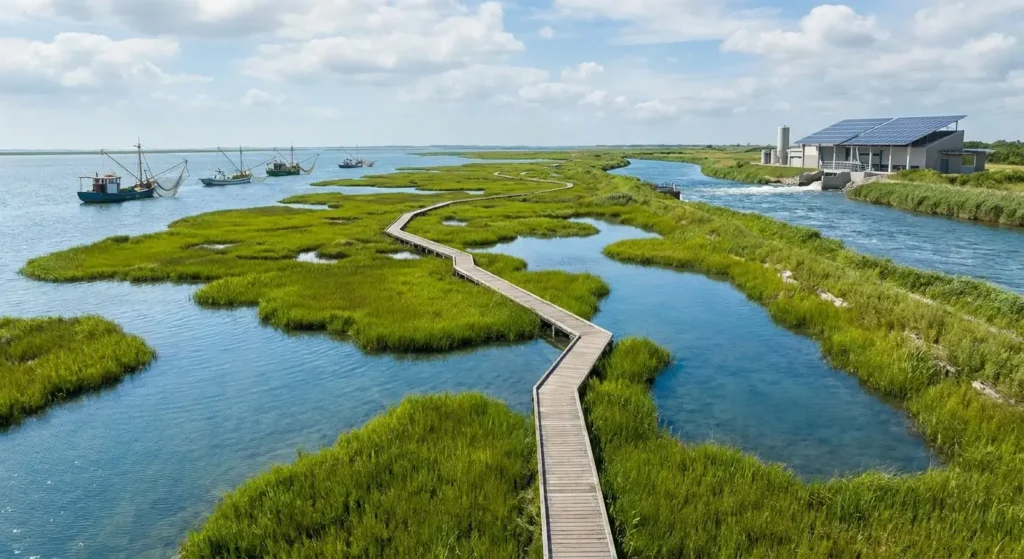
Blue bonds represent a growing sub-category of sustainable debt, channeling capital toward marine conservation, sustainable fisheries, and clean water infrastructure. The global blue bond market surpassed 13 billion euros in cumulative issuance through 2023.
What Investors Should Be Doing Now
The honest answer is that most institutional portfolios are not yet adequately pricing any of these risks. Emissions data is increasingly available, but even that picture is being distorted by the AI-driven reversal of commitments from major technology companies. Water risk is poorly disclosed and rarely modeled at the portfolio level. Biodiversity frameworks are new and adoption is slow. The just transition has no standardized metrics. Defense inclusion is still being processed by portfolio teams.
What Friedland’s perspective suggests is that the next phase of sustainable investing will require the same analytical infrastructure built for carbon, applied to a much broader and harder set of physical and social risks. The data is improving. Frameworks like the Taskforce on Nature-related Financial Disclosures (TNFD), the CDP water security questionnaire, and the ISSB standards are building the scaffolding. Firms that develop analytical capacity ahead of mandatory disclosure requirements will be in a different position than those waiting for regulation to force the issue.
The risks Friedland identified are not niche concerns. Water, power, biodiversity, and the human cost of industrial transition are central questions for the next phase of the global economy. The job of institutional investors is to price them before they show up in the news.
You can listen to the full conversation here. For more conversations on the future of sustainable investing, explore the full SRI 360 podcast archive.