In 1969, the Pearson Commission recommended that wealthy nations devote 0.7 percent of gross national income (GNI) to overseas development assistance (ODA). The United Nations adopted that target the following year, and it has anchored development funding debates for more than five decades, according to the UK’s Independent Commission for Aid Impact (ICAI). The scale of the current pullback is set overwhelmingly by one country. Aid from Development Assistance Committee (DAC) donor governments fell 23.1 percent in real terms in 2025, the largest annual contraction on record, and the United States alone drove three-quarters of that decline as its own ODA fell 56.9 percent, according to OECD data. Other donors are cutting too, just on a smaller scale: the UK government plans to reduce its own ODA spending from 0.5 percent of GNI to 0.3 percent by 2027, the lowest share since 1999, per the same ICAI report. But given the size of its economy and its historic role as the largest single donor, it’s Washington’s retreat, not London’s, that is reshaping the overall picture.
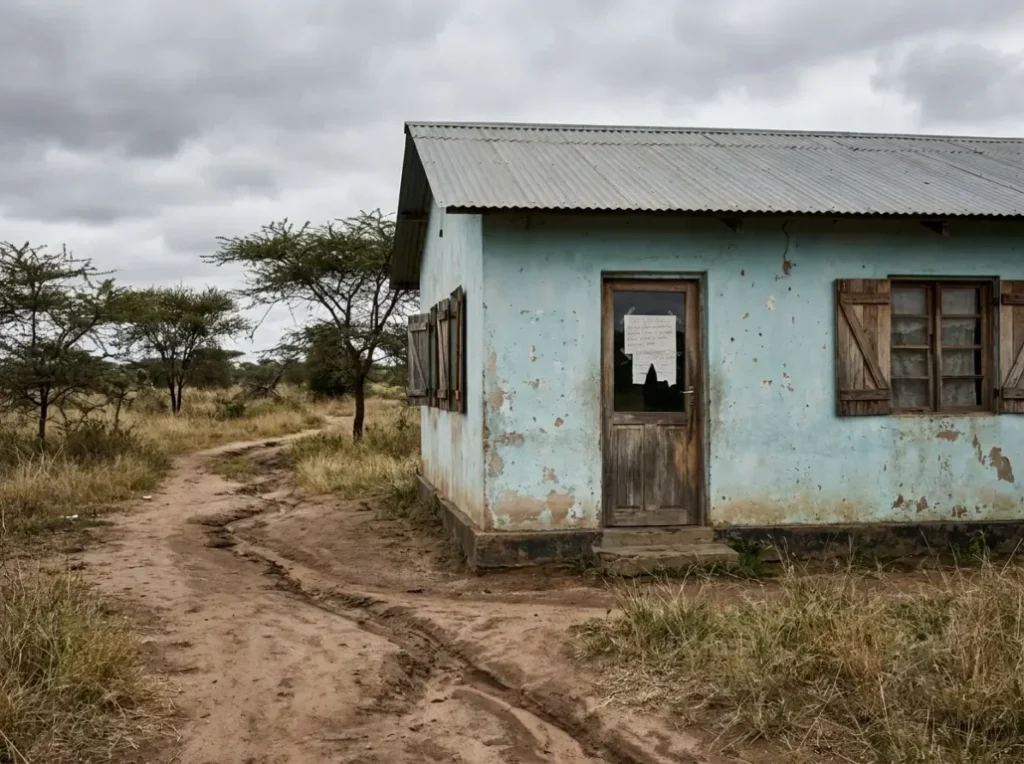
When the Funding Stops: A Clinic That Ran for Years on Donor Money, and Then Didn’t
I recently spoke with Leslie Maasdorp, chief executive of British International Investment (BII), about what happens once that funding keeps shrinking. His argument goes beyond the budget line items. The donor recipient model built during the aid era, he said, has created a dependency that recipient countries are increasingly uncomfortable with, on top of real inefficiencies from having multiple institutions and donor governments working in parallel on overlapping problems.
What’s actually at stake when the money disappears
The stakes aren’t hypothetical. When the US government shut down USAID in 2025, health programs that had run for years, including antiretroviral treatment for people living with HIV, stopped from one day to the next in several countries, Maasdorp noted. A Lancet Global Health study modeling the effects of the broader 2025 aid cuts, funded by ISGlobal and the Rockefeller Foundation, estimated the cuts could contribute to an additional 9.4 million deaths by 2030 under a moderate scenario, rising to 22.6 million under a more severe one, according to CNN’s reporting on the study. Those figures are projections built on modeling assumptions, not a completed tally, but they give some sense of what’s actually on the line when funding for basic health infrastructure disappears abruptly rather than being wound down in an orderly way.
Mission 300: development treated as an investable problem
One version of what comes next is already running. Mission 300, led by the World Bank alongside the African Development Bank and a group of development finance institutions including BII, set a target of connecting 300 million people in Africa to electricity by 2030. As of June 2026, the initiative reports having connected more than 50 million people across 40 countries, backed by $15 billion in committed financing, a further $4.5 billion in co-financing, and $7 billion in additional pledges, according to a World Bank press release. The model leans on private capital and blended structures rather than direct grant funding, treating electricity access as an investable infrastructure problem rather than a purely charitable one.
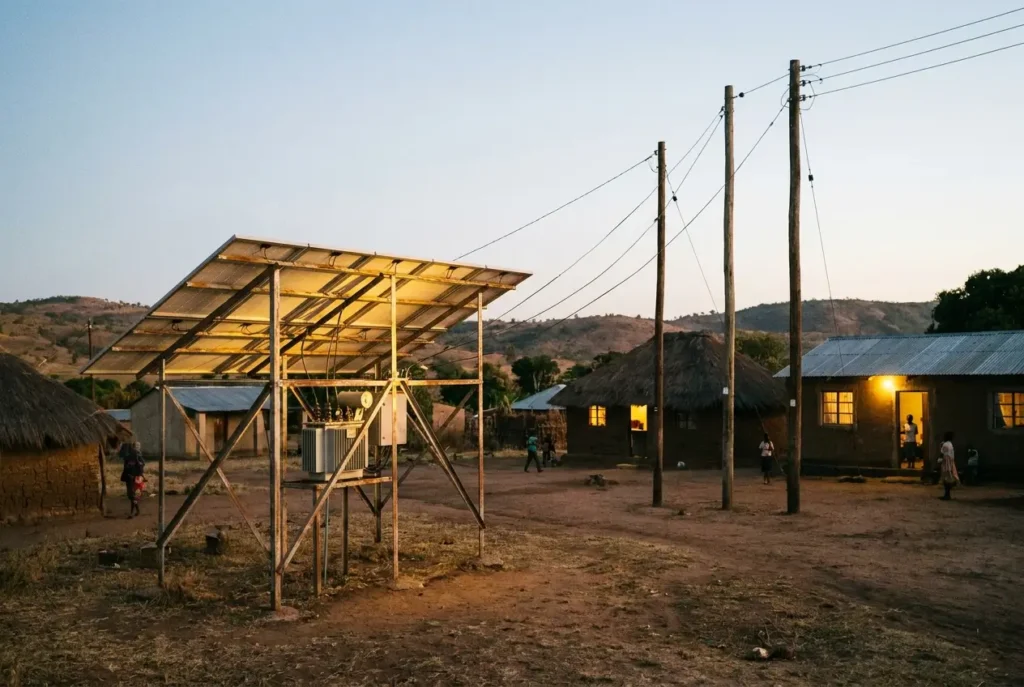
Fifty Million Connections and Counting: Mission 300’s Bet on Private Capital Over Grants
BII’s own newly launched 2026-2031 strategy runs on similar logic. Rather than growing its own balance sheet indefinitely, the plan aims to commit up to $8 billion of BII’s capital over five years while mobilizing a further $7 billion from private investors, reaching a combined $15 billion, according to Devex’s coverage of the launch. The institution is also directing 25 percent of its capital specifically to the least developed and most fragile markets, a deliberate answer to the concern that a private capital led model will simply chase the more investable, better collateralized deals and leave the hardest cases behind.
What that shift looks like on the ground was on display in Zambia last year, when BII launched Growth Investment Partners Zambia, a $70 million platform aimed at funding small and medium sized businesses, with the country’s president attending the launch. It’s a modest sum relative to the scale of the region’s financing gap, but it captures the model’s logic: local ownership of the vehicle, a return-seeking structure rather than a grant, and a specific gap in access to finance rather than a general aid disbursement.
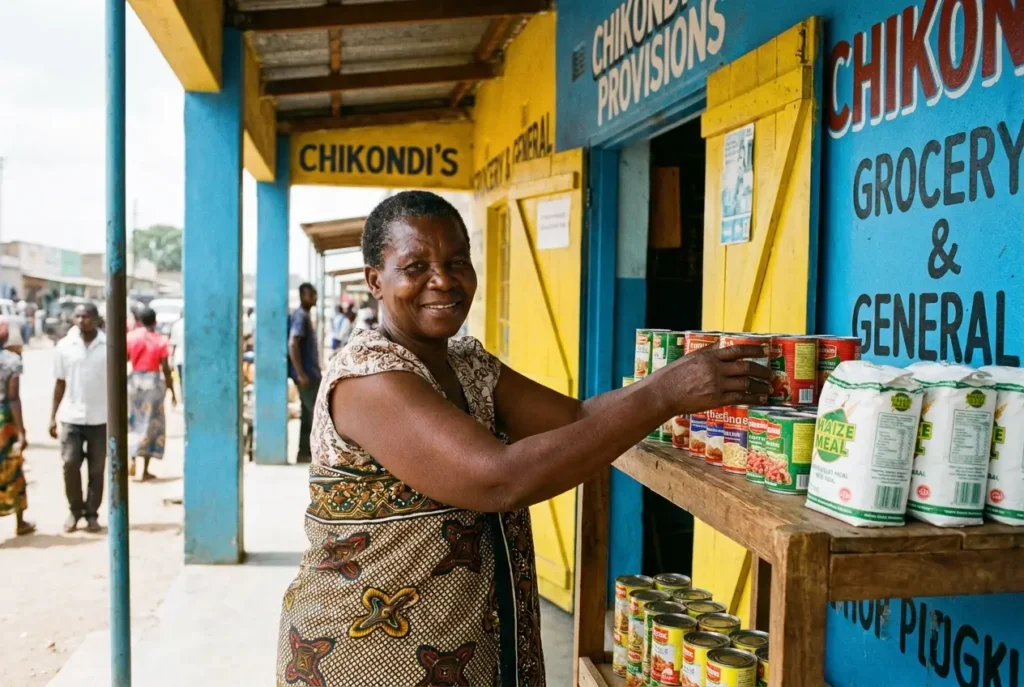
The Missing Middle: The Businesses GIP Zambia Was Built to Reach, and Global Markets Won’t
Where this model still comes up short
That 25 percent commitment doesn’t fully resolve the concern behind it. Private capital, even the concessional (offered on deliberately below-market terms) and blended varieties development finance institutions use to reach further down the risk curve, still needs a plausible path to repayment. Grants don’t. There’s a category of need, humanitarian relief, basic health infrastructure in the poorest and least stable states, disaster response, that doesn’t generate cash flow no matter how creatively it’s structured, and no blended fund is built to replace it. The private capital led model that Mission 300 and BII’s new strategy represent is a genuine answer to the funding gap in infrastructure and productive investment. It isn’t, on its own, a replacement for the parts of the old aid system that were never meant to earn a return in the first place.
The donor recipient model of the past five decades is ending largely because the money behind it is disappearing, not because a better system was designed and agreed on first. What comes next is being built in the gap between those two facts.
Listen to the full conversation: Leslie Maasdorp on the SRI 360 podcast
More conversations with institutional investors on sustainable and responsible investing: Browse the SRI 360 podcast archive