Capital can flow into a community and change almost nothing. That is not a controversial observation. Researchers have documented it. Practitioners have watched it happen. And yet the dominant framework in community development finance is still largely about the supply of capital: how much is going in, which instruments are carrying it, what the credit quality looks like.
The question that gets far less attention is what happens on the other side. What happens in a community where decades of exclusion have conditioned people to expect that systems will fail them, that applications will be denied, that opportunities are for other people? Ron Homer calls this “conditioned helplessness,” and he has spent fifty years watching it undermine otherwise well-designed community finance programs.
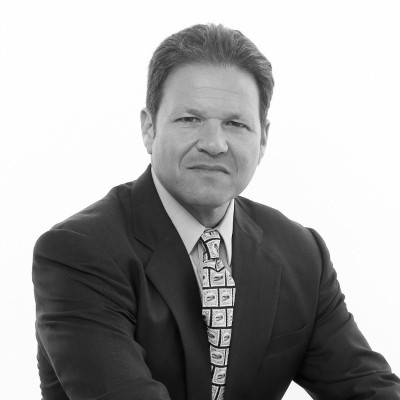
I spoke with Ron Homer, Chief Strategist for U.S. Impact Investing at RBC Global Asset Management (a major Canadian bank’s asset management division), about the gap between deploying capital and actually changing communities. His perspective is not academic. It comes from building a community bank in Boston, developing one of the earliest low-income housing projects in Rochester, watching that project fall apart twenty years later, and spending the rest of his career trying to understand what the brick-and-mortar approach left out.
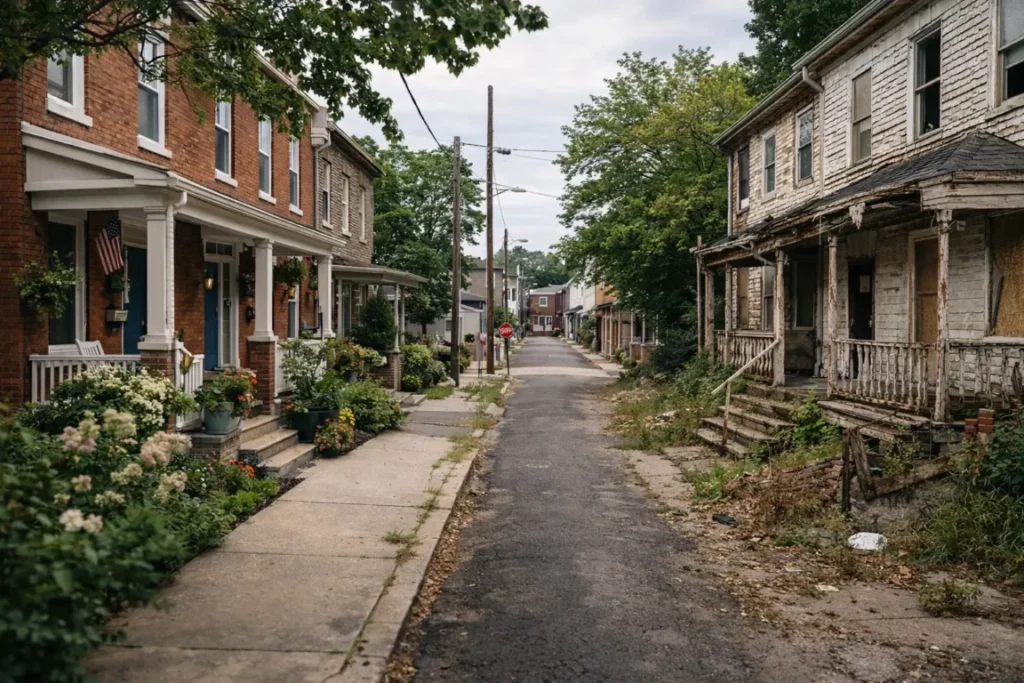
Physical investment in a community is necessary but not sufficient. Without trust, financial education, and visible examples of success, capital rarely produces the outcomes it promises.
The Psychological Problem Underneath the Capital Problem
Martin Seligman first described “learned helplessness” in the 1960s through experiments with animals subjected to inescapable stress. The subjects eventually stopped trying to escape even when the opportunity to do so was available. They had learned, through repeated experience, that their actions produced no effect. So they stopped acting.
As Seligman’s work and subsequent researchers have documented, the same pattern appears in human populations facing persistent, uncontrollable adversity. The behavioral deficits are consistent: people stop initiating, stop trying, and develop a generalized expectation that their efforts will not lead to positive outcomes. This is not weakness or lack of ambition. It is a learned response to a documented reality.
Applied to communities that have experienced decades of mortgage denial, predatory lending, bank branch closures, and discriminatory barriers to small business capital, the pattern is not hard to see. Ron Homer described it using the Pavlovian language he brought from his psychology studies at Notre Dame: “If a rat can’t escape a shock, it just learns to accept it and just waits. That’s part of how communities suffer.”
The investment implication is direct. When community development capital arrives in a neighborhood where residents have been conditioned to expect systems to fail them, utilization rates stay low. People do not apply for loans they expect to be denied. They do not open bank accounts at institutions they do not trust. They do not engage with programs administered by organizations that have no history in the neighborhood. The money sits, or flows out, or produces buildings without producing change.
“If you have a community that thinks the only way to get money is through concessions,” Ron said, “that’s not going to work over a long time. The community doesn’t really need concessions. It’s just sometimes people have adopted an understanding, or just a lack of familiarity, and they say, ‘I’ll never get it traditionally, so I’m going to try to get it another way.'”
What the Racial Wealth Gap Actually Looks Like in Numbers
The behavioral pattern Ron describes does not exist in a vacuum. It is a response to a documented material reality.
The Federal Reserve’s 2022 Survey of Consumer Finances (SCF, a comprehensive survey of U.S. household finances conducted every three years) shows that median Black household wealth reached $44,890 in 2022, against $285,000 for White households. That is a gap of approximately $240,000. According to Brookings Institution research, even as Black household wealth grew in percentage terms during the pandemic years, the absolute dollar gap widened. For every dollar of median wealth held by a White household, a Black household holds roughly sixteen cents.
The Chicago Fed’s working paper on racial wealth gains and gaps documents that this disparity is driven primarily by asset composition. White households hold proportionally more in corporate equity, business ownership, and diversified financial assets. Black and Hispanic households hold proportionally more in primary residence value, which means their wealth is concentrated in a single illiquid asset and highly sensitive to local housing market conditions.
This is the material foundation for conditioned helplessness. When your community has been systematically excluded from wealth-building mechanisms for three generations, and when the wealth you do have is fragile and localized, rational pessimism about financial systems is not a cognitive distortion. It is an accurate reading of historical evidence.
Why Homeownership Is the Mechanism, Not Just the Symbol
Ron Homer has spent decades arguing that homeownership and small business ownership are not just nice symbols of community stability. They are the actual mechanisms through which communities change.
The data supports this. Research from NCRC (the National Community Reinvestment Coalition) shows that over 90% of Black household wealth gains between 2013 and 2022 came from home equity. According to the Federal Reserve’s 2024 household finance data, lower-income families with incomes below $50,000 have homeownership rates between 35% and 47%, compared to over 85% for families earning above $100,000.
But here is the thing Ron emphasizes that gets missed in most policy discussions: homeownership changes behavior, not just balance sheets. “If you have one or two people who take pride in their home and do little things to improve it, maybe that becomes three people and four people and five people.” He pointed to the Bedford-Stuyvesant Restoration Corporation (a community development organization founded in 1967 by Robert F. Kennedy in partnership with the Ford Foundation) as an example. The program gave residents painted doors and garbage cans. That sounds trivial. Ron saw the blocks where it happened change visibly and immediately.
The psychological mechanism is the reversal of conditioned helplessness. Visible evidence that action produces results breaks the expectation of futility. One homeowner who improves their property demonstrates, to neighbors who can see it, that investment in this community is worth making.
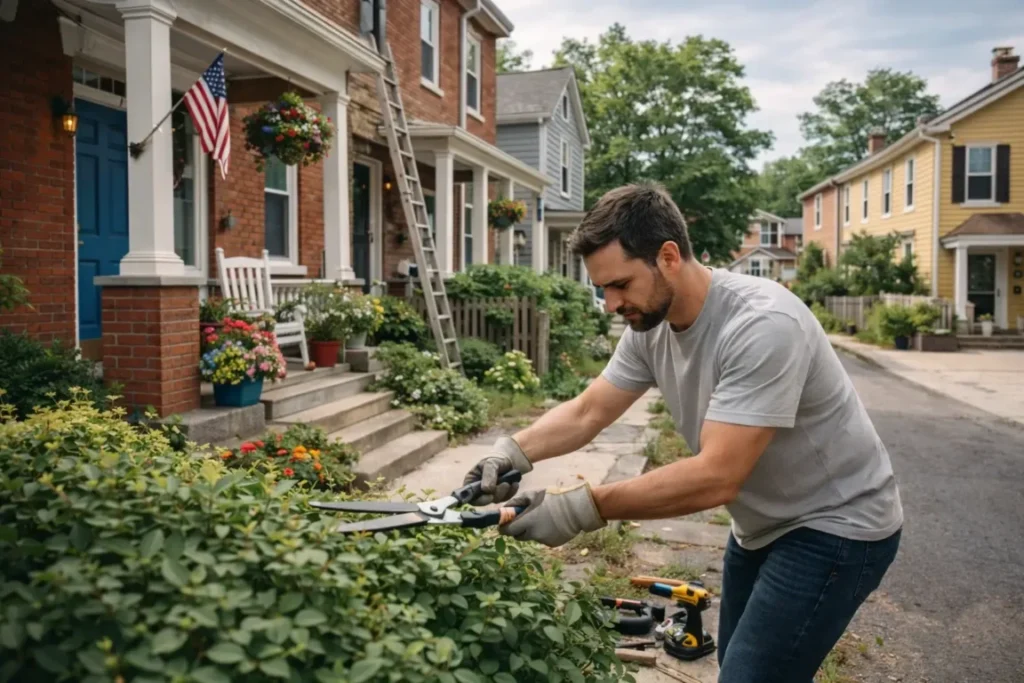
Homeownership changes behavior as much as it changes balance sheets. Visible pride in property is contagious in ways that aggregate data rarely captures.
Small Business as the Second Pillar of Community Wealth
Homeownership alone is not sufficient. Ron Homer consistently frames homeownership and small business ownership together, because both function as what he calls “beacons” within a community.
The data on minority small business ownership confirms how much ground there is to cover. According to the U.S. Census Bureau’s Annual Business Survey, Black-owned employer businesses account for only 3.4% of all employer firms in the United States. Hispanic-owned firms make up 8.4%. NCRC research estimates that if the Black business ownership rate increased by 10 percentage points, average Black household wealth would increase by roughly $53,000, nearly doubling the current median figure.
The barrier is capital access. Black small business owners are roughly twice as likely to be denied commercial financing as their White counterparts. The problem compounds: without capital, businesses cannot scale; without scaled businesses, communities lack visible examples of entrepreneurial success; without those examples, the conditioned expectation of failure stays intact.
Ron’s approach is to identify the financial infrastructure gaps and fill them at the structural level rather than the individual loan level. His team at RBC Global Asset Management has been developing programs to connect mission-based small business lenders to the SBA (Small Business Administration) secondary market, so that lenders focused on underserved borrowers can sell their loan portfolios and redeploy capital into new loans. The logic mirrors what he built with mortgages in the 1990s: use secondary market access to amplify the capacity of lenders who are already doing the right thing.
Predatory Lending and Why Distrust Is Rational, Not a Character Flaw
The behavioral distrust Ron describes in underserved communities is frequently misdiagnosed as a psychological failing. It is more accurately described as a learned response to documented exploitation.
Historical redlining denied mortgage credit to Black communities from the 1930s through the 1960s. When deregulation opened the lending market in the late 1990s and 2000s, the same neighborhoods that had been denied prime credit were flooded with subprime and predatory products. Research published in PMC (the National Library of Medicine’s public archive) shows that subprime loans were three to five times more common in low-income and predominantly Black neighborhoods than in comparable affluent White neighborhoods, even after controlling for risk factors. As American Progress has documented, Black and Hispanic borrowers were more likely to receive high-cost loan products than White borrowers with equivalent credit profiles.
The 2008 foreclosure crisis disproportionately destroyed minority housing wealth. Families who had finally entered the homeownership market, many of them through products that were designed to fail, lost not just their homes but whatever equity they had managed to build.
Against this backdrop, the distrust that Ron encounters when community members hesitate to engage with financial institutions is not irrational. It is historically informed. “Part of the problem in access to capital in some of this community is just a lack of trust,” he acknowledged. The implication for investors deploying community development capital is that trust has to be built into the program design, not assumed.
The Financial Literacy Gap and What It Costs
One specific dimension of the access problem that Ron returns to repeatedly is financial literacy. Not because he believes underserved communities lack capability, but because the technical language of capital markets is genuinely unfamiliar to people who have been excluded from those markets for generations.
The numbers on financial literacy disparities are consistent. According to research published through the World Economic Forum, most U.S. adults cannot correctly answer basic questions about compound interest, diversification, and inflation. The Motley Fool’s financial literacy research shows that the average American scores below 50% on financial knowledge assessments. The gaps are most pronounced along racial and income lines, with Black and Hispanic Americans consistently scoring lower on financial knowledge measures than White and Asian Americans.
This is not a fixed characteristic. It is a reflection of historical exclusion from institutions that teach these concepts. Ron’s argument is that the advocates for underserved communities sometimes compound this problem by demanding the wrong things: concessions, charity, special programs, when what their constituents actually need is mainstream capital market access. “The advocates for the community, if they’re not fully understanding of the economics, ask and demand for the wrong things that actually discourage finance as opposed to welcome it.”
The solution he has seen work is community-based lenders who serve as translators, organizations that understand both the capital markets and the communities they serve, and can build trust with both sides. CDFIs (Community Development Financial Institutions) play this role well when they have adequate capacity.
CDFIs and the Trust Shortcut
CDFIs (Community Development Financial Institutions, specialized lenders certified by the U.S. Treasury that operate in markets conventional banks do not serve) are a growing force in bridging the trust gap between underserved communities and the formal financial system. By 2024, over 1,400 CDFIs were certified nationally, according to the CDFI Fund’s 2024 Annual Report. The Fund has deployed more than $8 billion in direct monetary awards and facilitated $81 billion in New Markets Tax Credit (NMTC) allocations. NMTCs are federal tax credits that attract private investment into low-income communities. Approximately 84% of CDFI customers are low-income, and 60% are borrowers of color.
The reason CDFIs work where conventional lenders fail is not their loan products. It is their presence and history in the communities they serve. A CDFI that has been operating in a neighborhood for ten years has built the kind of institutional credibility that a new bank branch cannot replicate quickly. The community knows the staff, understands the process, and has seen neighbors use the product successfully.
Ron described this dynamic from his own experience running Boston Bank of Commerce in the 1980s. His bank, despite being a fraction of the size of major regional banks, made 35% of all mortgages to Black and Latino borrowers in Boston during its peak operating years, according to a Federal Reserve Bank study. The reason was not special programs. It was that people in those communities trusted the institution.

Community Development Financial Institutions succeed where conventional banks fail not because of their products, but because of the trust they have built over years of presence in the communities they serve.
What Actually Works Beyond Physical Construction
The lesson Ron drew from watching his Rochester housing project deteriorate twenty years after he built it is one he has repeated throughout his career. He built a 250-unit low-income housing development in the 1970s through Marine Midland Bank. When he went back years later, it was in severe decline, with gang activity and drug use throughout. “Building community is not about building buildings,” he concluded. “There’s brick and mortar, but there’s also community building. And unless you have all of that together, you’re not going to change the opportunity and the character of communities.”
This is backed by research. Studies on wraparound services in community development consistently show that capital-only interventions produce weaker outcomes than integrated approaches combining financial support with education, business assistance, childcare, health services, and other forms of direct support. The Urban Institute’s analysis of wraparound services and the Learning Policy Institute’s review of community school models both document statistically significant positive outcomes when economic interventions are paired with direct human support.
The implication for impact investors is not that every investment needs to include wraparound services. It is that physical construction and loan origination are necessary but not sufficient conditions for lasting community change. Capital that flows in without addressing the behavioral and trust dimensions of community development will consistently underperform its potential.
What Ron Homer Learned from a Housing Project That Fell Apart
Ron’s willingness to reflect on his own failures is one of the things that sets him apart from most impact investors. The Rochester housing project is a case study he uses deliberately. He built it, he was proud of it, and he went back to find it in ruins.
“That was a teaching moment,” he said. “Building community is not about building buildings. It’s about building support, opportunity, character.”
His most painful rapid-fire answer in the conversation was about a bad investment: “It was building low-income housing where you just warehouse a lot of low-income people in a development without support, without building a community. That clearly hasn’t worked.”
The honest accounting of what does not work is as important as the accounting of what does. Community development finance has a long history of well-intentioned projects that failed because they treated housing or business capital as an endpoint rather than a starting point.
The Appetite for Impact Is Cyclical, But the Problem Is Not
Ron is direct about the state of institutional appetite for impact investing. “There’s an ebb and flow. Sometimes the appetite is greater, sometimes it becomes less. A lot depends on the overall economic environment.” He described the period following COVID-19 and the Black Lives Matter movement as a high point of institutional engagement, and characterized the current moment as entering a lower-flow period.
This is consistent with broader market data. According to US SIF’s 2025-2026 Sustainable Investing Trends Report, U.S. sustainable investment assets held at approximately $6.6 trillion in 2025, stable despite political headwinds. The GIIN (Global Impact Investing Network, the leading industry research organization) estimates total global impact investing assets under management at $1.57 trillion in 2024, up from $715 billion in 2020. That is a 21% compound annual growth rate over four years. The underlying appetite is real, even if its expression in any given quarter is variable.
The core problem, as Ron has always framed it, is not the appetite for capital. It is the willingness to deploy it with enough consistency and strategic depth to actually break the cycle. “The failure has not been that it can’t be done,” he said. “The failure has been that it hasn’t been applied strategically and consistently enough.”
That is a structural observation, not a political one. And it applies as much to the communities receiving the capital as to the investors deploying it.
To hear Ron Homer’s full story, including his time in the Bobby Kennedy motorcade, his experience building community banks in Boston and Harlem, and his theory of change for redirecting mainstream fixed income into underserved communities, listen to Episode 113 of the SRI 360 Podcast.
For more conversations at the intersection of institutional investment and social impact, visit the SRI 360 Podcast and browse the full archive at sri360.com.