
There is a version of Wall Street’s most widely used debt instrument that does something most investors have never considered. It does not require a concessionary return. It does not rely on charity or philanthropic subsidy. It simply applies the same financial mechanics that built America’s suburbs, and points them toward communities that were deliberately cut off from those mechanics for decades.
I recently spoke with Ron Homer, Chief Strategist for U.S. Impact Investing at RBC Global Asset Management, and one of the people most responsible for proving that this approach works. Ron co-founded Access Capital Strategies in 1997, built what is widely considered the first registered mutual fund focused exclusively on community development finance, and watched his portfolios outperform during the 2008 financial crisis, at a moment when most of Wall Street was in freefall. His story is worth understanding not just for what it says about one man’s career, but for what it reveals about a corner of fixed income markets that institutional investors have been slow to take seriously.

Mortgage-backed securities pool thousands of individual home loans. The question Ron Homer spent a career asking is: which communities get included in those pools.
What a Mortgage-Backed Security Actually Is
Most people have heard the term mortgage-backed security (MBS) without fully understanding what one is. The mechanics are not complicated. A bank or lender originates a home loan. That loan is then sold into the secondary market, where it gets pooled with thousands of similar loans. Securities are created from that pool and sold to investors, who receive the monthly principal and interest payments that flow from the underlying borrowers. This is what “securitization” means: turning an illiquid individual loan into a tradeable, liquid security.
Fannie Mae (the Federal National Mortgage Association, a government-sponsored enterprise) plays a specific role in this process. When Fannie Mae acquires loans from lenders and bundles them into MBS pools, it guarantees the timely payment of principal and interest to investors, regardless of whether any individual borrower defaults. According to Fannie Mae’s own MBS program documentation, the agency absorbs the credit risk and passes through the cash flows, creating what is effectively an institutional-grade fixed income instrument with U.S. government backing behind the credit. In exchange, Fannie Mae charges lenders a guarantee fee, calculated to cover projected credit losses, administrative costs, and required capital returns.
The result is a deep, liquid market. According to SIFMA (the Securities Industry and Financial Markets Association, the main U.S. financial industry trade group), total MBS issuance in the first quarter of 2026 reached $540.8 billion, up 30% year over year. Agency MBS (those guaranteed by Fannie Mae, Freddie Mac, or Ginnie Mae) form the dominant portion of the market, which totals over $9 trillion in outstanding securities.
What Ron Homer figured out in the mid-1990s is that the structure of this market creates a specific financial opportunity. And it exists precisely because of what happened to certain communities in the decades before.
How Redlining Cut Off an Entire Generation from Mortgage Credit
To understand why community development MBS matters, you have to understand why it was necessary in the first place.
The Federal Housing Administration (FHA) was created in 1934 to stabilize a mortgage market destroyed by the Great Depression. It succeeded, but the way it succeeded is the part that gets left out of most textbook accounts. The FHA’s 1938 Underwriting Manual explicitly cited “the infiltration of inharmonious racial groups” as a credit risk factor and recommended restrictive covenants to prevent racially integrated neighborhoods. The agency systematically denied mortgage insurance in Black and minority communities, a practice that became known as redlining.
The consequences were not abstract. Between 1934 and 1962, only 2% of the $120 billion in federally subsidized new housing went to non-White families, according to research cited by MassBudget. In some cities, the FHA made zero loans to Black borrowers during entire decades of operation, as documented by the Federal Reserve’s historical analysis of redlining. This was not private discrimination by individual actors. This was federal policy, carried out systematically, at scale.
Ron Homer grew up in Bed-Stuy (Bedford-Stuyvesant, a neighborhood in Brooklyn, New York) during the years when these policies were actively reshaping his neighborhood. He watched the community shift from predominantly homeowner-occupied to renter-occupied, watched absentee landlords replace invested neighbors, and spent decades trying to understand why that happened. He eventually traced it directly to the withdrawal of mortgage credit. “The reason I learned later on that Bed-Stuy went from high home ownership to lower home ownership was that the FHA would not guarantee mortgages made in predominantly Black communities,” he explained.
The CRA and HMDA Changed the Rules
Congress eventually moved to address this. The Home Mortgage Disclosure Act (HMDA) was passed in 1975, requiring lenders to collect and publicly disclose loan data by geography, borrower race, and income. That data became the empirical foundation for enforcement. Two years later, the Community Reinvestment Act (CRA) of 1977 required federally insured banks to actively help meet the credit needs of the communities they serve, specifically targeting low and moderate income (LMI) neighborhoods.
As the Federal Reserve’s CRA overview explains, the CRA is enforced by three federal regulators: the Federal Reserve, the Federal Deposit Insurance Corporation (FDIC), and the Office of the Comptroller of the Currency (OCC). Banks with poor CRA ratings can face regulatory roadblocks to mergers, acquisitions, and branch expansions.
Ron Homer was directly involved in shaping the regulations around both acts. When banks began merging at scale in the 1990s and needed CRA compliance, he was the person they came to. He had already spent years making loans in underserved communities at Boston Bank of Commerce, a community-focused bank he built in the 1980s. He understood what the data showed and what the regulations required. That combination of practical lending experience and regulatory knowledge is what made the Access Capital model possible.
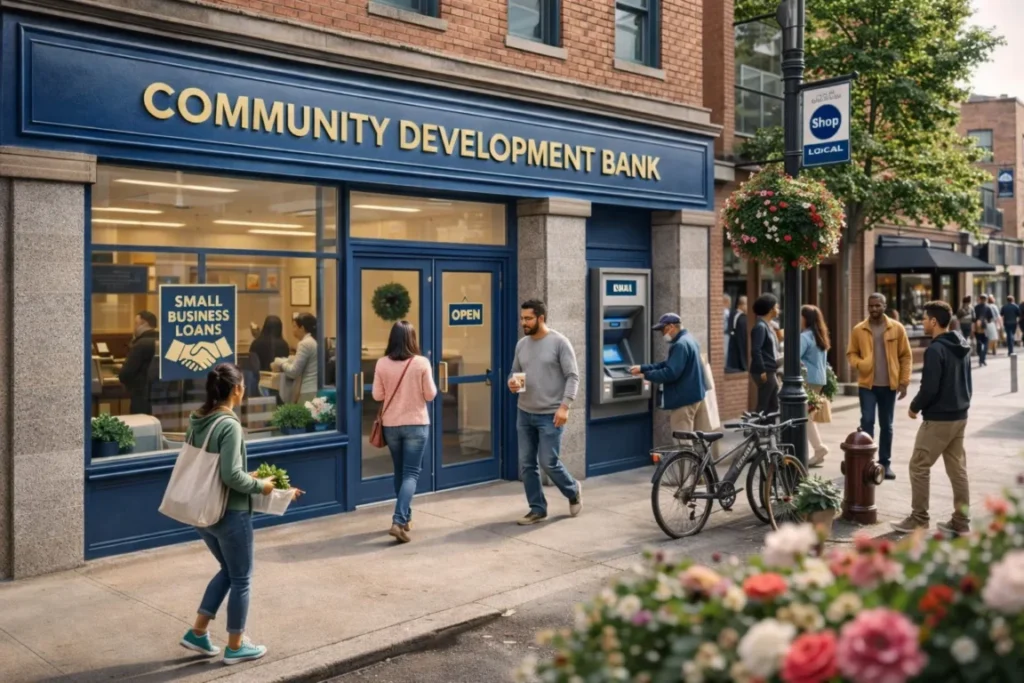
Homeownership for low and moderate income borrowers is not just a social outcome. It is the financial asset around which most minority family wealth is built.
Why Low-Income Mortgages Prepay More Slowly (and Why That Matters)
Here is where the financial engineering gets interesting, and where Ron Homer’s insight was genuinely original.
Every mortgage contains an embedded option: the borrower can prepay at any time. When interest rates fall, borrowers with high-rate fixed mortgages typically refinance, returning principal to MBS investors at the worst possible moment (when reinvestment rates are low). This is called “negative convexity” in bond terminology, and it is the core risk of owning mortgage securities.
Ron Homer noticed something that most MBS investors had not paid much attention to. Lower-income borrowers and working-class families tend to prepay their mortgages much more slowly than affluent borrowers. The reasons are practical: refinancing a small balance loan produces modest dollar savings, so the incentive is weaker. Many LMI (low and moderate income) borrowers face friction in accessing the refinance market. And families who view their home primarily as shelter, not as a financial instrument to be optimized, do not respond to rate changes the same way that financially sophisticated borrowers do.
Research cited in academic analyses of LMI mortgage performance confirms this pattern. LMI borrowers, as well as Black and Hispanic borrowers, prepay more slowly than conventional borrowers regardless of whether refinancing would be mathematically optimal. This slower prepayment extends the duration of LMI-backed MBS pools in falling-rate environments, reducing negative convexity and improving the stability of cash flows for investors.
Ron explained the logic clearly: “The value of a mortgage, when rates drop, is that if it’s a 30-year fixed rate and people pay off right away, you lose some of your advantage. I knew from experience that lower-balance mortgages and mortgages to working-class and lower-income people don’t refinance as fast. They tend to stay in those residences for a long period of time.”
The financial result: MBS pools constructed around LMI mortgages, especially when wrapped in Fannie Mae’s credit guarantee, can actually outperform conventional agency MBS on a risk-adjusted basis. That is the structural insight at the heart of the Access Capital model.
The Scale of the Market Most Investors Ignore
The U.S. fixed income market is vast. Total outstanding U.S. fixed income securities stood at $49.6 trillion in the fourth quarter of 2025, according to SIFMA. Of that, agency MBS represent one of the two most liquid asset classes in the world, behind only U.S. Treasuries.
The LMI segment of this market is not some exotic corner. When Ron Homer built Access Capital’s strategy, he was not creating a new asset class. He was redirecting existing flows within a market that already functioned. The key insight he brought to Fannie Mae and to institutional investors was that you could identify LMI-targeted loans within the existing agency MBS structure, pool them deliberately, and create securities that tracked specific communities, income levels, and geographies.
“If you tell people you own Fannie Mae mortgage-backed securities anyway,” he said, “and if we can arrange that those securities are in neighborhoods that you care about, why would you own Fannie Mae mortgage-backed securities that support mortgages in some bundle 10 states away when you could own ones that support mortgages in your community?”
That is not impact at the expense of returns. It is the same credit quality, the same government guarantee, with added specificity about who the borrowers are and where they live.
The Racial Homeownership Gap Has Not Closed
The reason any of this continues to matter is that the underlying problem has not been solved.
According to Federal Reserve Economic Data (FRED), the Black homeownership rate fell to 44.2% in the fourth quarter of 2025, against a White homeownership rate of 75.1%. That is a gap of nearly 31 percentage points. For context, this gap is wider than it was in 1968, when the Fair Housing Act was passed.
The National Association of Realtors has documented that Black homeownership gains made in the early 2020s have partially reversed. Homeownership is the primary vehicle through which LMI and minority families build wealth. Research from the NCRC (National Community Reinvestment Coalition) shows that more than 90% of Black household wealth gains between 2013 and 2022 came from home equity. When families cannot buy homes, or lose them, that wealth accumulation pathway closes.
This is the practical case for community development MBS: not charity, but addressing a documented market failure that continues to generate measurable financial exclusion.
Why Mission-Based Lenders Get Locked Out of the Secondary Market
CDFIs (Community Development Financial Institutions) are lenders specifically designed to serve communities that conventional banks avoid. They are typically certified by the U.S. Treasury’s CDFI Fund and operate in markets where credit access is thin or nonexistent.
The problem is structural. Secondary market securitization works by pooling homogenous, standardized loans into predictable yield and default models. CDFI portfolios tend to involve low-balance loans, non-standard underwriting designed for borrowers outside conventional guidelines, and small loan volumes that cannot easily form pools. As the Federal Reserve Bank of San Francisco has documented, CDFIs are frequently forced to hold loans on their own balance sheets because they cannot access the secondary market, which traps their capital and limits new lending capacity.
Ron Homer identified this as one of the areas where his team at RBC Global Asset Management is currently working. He described a strategy to help smaller, mission-based lenders access the secondary market by building the infrastructure that connects them to institutional buyers. “Most of them have been closed out,” he said. “Part of what we’re trying to do is build capacity to empower smaller lenders who are interested in some of these underserved communities to gain access to the secondary market.”

Community Development Financial Institutions often serve the borrowers that conventional banks pass over. Connecting them to the secondary market is the next frontier in community development finance.
What the 2008 Crisis Revealed About This Strategy
The 2008 financial crisis was a stress test for every fixed income strategy in existence. Most agency MBS did fine. Subprime and private-label securitizations collapsed. But LMI-targeted agency MBS, the kind Ron Homer had been building for over a decade, did something unexpected: they performed better than the broader market.
The reason goes back to the prepayment logic. When rates collapsed from 8-9% to 2-3%, most conventional borrowers refinanced immediately, pulling principal out of MBS pools. LMI borrowers largely could not or did not. The mortgages stayed in place. The government guarantee protected against default. The cash flows kept coming. Ron described the outcome: “We were the highest performing investment New York City had in their whole portfolio. We made 10% from 2009 to 2011.”
This was not luck. It was the direct consequence of a structural insight about borrower behavior that conventional MBS investors had underpriced for years.
The U.S. Treasury’s own analysis of its agency MBS purchase program during the crisis confirms the asset class’s resilience. The Treasury purchased $225 billion in agency-guaranteed MBS to stabilize the housing market. When it wound down that portfolio, it recorded a net positive return of $25 billion for taxpayers.
The SBA Secondary Market as a Community Development Tool
Beyond mortgages, the Small Business Administration (SBA) 7(a) loan program offers a parallel mechanism for community development finance. The SBA 7(a) program allows lenders to originate small business loans with up to 85% of the principal guaranteed by the federal government.
Lenders can then sell the guaranteed portion of these loans into a secondary market as SBA Guaranteed Loan Pool Certificates. The result is similar to agency MBS in structure: government-guaranteed, liquid, and institutionally tradeable. According to the SBA’s secondary market documentation, this market processes over $1 billion in transactions monthly.
Ron noted that the SBA program, historically focused on traditional commercial bank lenders, has expanded in recent years to include more community-oriented originators. He described plans to develop secondary market access for SBA loans originated by mission-based lenders, so that small business capital can reach underserved communities the same way LMI mortgages have been directed there for the past three decades.
Where the Field Stands Today
RBC Global Asset Management currently manages approximately $3 billion in community investment strategies, within a U.S. fixed income platform of around $80 billion in assets under management (AUM, the total value of investments a firm manages on behalf of clients). Those strategies have financed over 50,000 individual homes and tens of thousands of affordable multifamily units. For institutional clients like the New York City Retirement Systems (NYCRS, the fourth largest public pension plan in the United States), Ron’s team provides quarterly reports tracking every dollar to the specific mortgage, census tract, borrower income level, and racial demographic. Roughly 65-70% of the portfolio goes to BIPOC (Black, Indigenous, and People of Color) homeowners, and 100% goes to borrowers below median income in their respective areas.
According to US SIF’s 2025-2026 Sustainable Investing Trends Report, U.S. sustainable investment assets reached $6.6 trillion in 2025, representing 11% of the total market. Community development fixed income is a growing part of that picture, supported by CRA regulatory pressure on banks, growing institutional demand for measurable impact, and a track record of performance that has now survived multiple market cycles.
The engineering Ron Homer applied in 1997 has held up. It produced competitive returns. It produced measurable community outcomes. And it did both without asking investors to accept less than they could get elsewhere.
To hear Ron Homer’s full story, including how he built Access Capital Strategies from scratch and what he learned from five decades of community development finance, listen to Episode 113 of the SRI 360 Podcast.
For more conversations with institutional investors on the front lines of sustainable and responsible investing, visit the SRI 360 Podcast and browse the full episode archive at sri360.com.