
“By 2040, we at Mercy Corps Ventures hope to see a constellation of investments across the economies we’re investing in that help people prepare for, adapt to, and respond to climate stresses and shocks. ”
— Timothy Rann
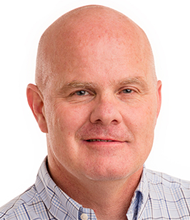
In this episode, my guest is Timothy Rann, Managing Partner of Mercy Corps Ventures. He leads what is likely the only venture capital fund in the world to have emerged from within a humanitarian NGO. When the fund was first created, Mercy Corps itself was a $600 million-a-year organization working in more than 40 conflict and climate-stressed countries.
Tim’s story begins in Riverside, a suburb of Chicago, where he grew up the son of a police officer and a mother who had once lived across Latin America in her “wild child days.” She worked as a Spanish language translator at a hospital in Chicago, but for most of his childhood she was a stay-at-home mom. Her constant presence balanced out his father’s irregular night shifts.
But his father also left an imprint. First, through a philosophy of service: policing not as chasing criminals, but as showing up in the community and solving the small, everyday problems of neighbors. There was also the hustle. His side business selling rock-and-roll memorabilia took Tim to flea markets and Beatles conventions, where he saw firsthand what small business really meant: relationships, late nights, and the grind of making ends meet when stability wasn’t guaranteed.
That mix of pragmatism and wanderlust carried him through the University of Notre Dame, a Catholic research university in South Bend, Indiana, where he studied accountancy and business administration. And even Japanese. Not exactly the obvious route into impact finance.
He actually showed up to college without a clear plan. He bounced between architecture, history, even film, before settling on business and languages. Math came easy after years of helping his dad figure out sales tax at flea markets. But his curiosity kept pushing him toward subjects that opened doors to the wider world.
His early career took him to Cambodia, Vietnam, and eventually Afghanistan – places where most investors would never go. He ran businesses in fragile economies and witnessed firsthand markets keep moving even when everything else seems to fall apart.
One moment in Kabul stuck with him: a fruit seller doing business in the middle of a war zone. It showed Tim a simple truth he’s carried ever since: as long as people are still trading, there’s resilience – and opportunity – to build upon.
After that, he and his wife moved to Jakarta, where he was recruited to help launch what became Mercy Corps Ventures. The original idea was to create “the equivalent of Google X inside a nonprofit.”
But that venture-building model proved too expensive. Tim and his team pivoted and convinced the board to let them invest directly in startups serving the Global South. They got just a million dollars with a blunt kind of blessing. “This is the least risky thing Mercy Corps does,” their counsel told them. “Nobody will die. Worst case, you guys get fired.”
From those beginnings, Mercy Corps Ventures has scaled into a family of four funds with more than 60 portfolio companies across Africa, Latin America, and Asia.
- Their first fund, launched in 2015, was evergreen, seeded by family offices and corporates, later joined by institutions like USAID and Proparco. It’s already produced a unicorn and multiple exits.
- The second fund, now aiming for $50 million, focuses on climate adaptation and resilience.
- The third fund is the Venture Lab. It puts small grants behind frontier ideas – everything from anticipatory cash transfers to glacier restoration.
- And the fourth is a Web3 fund. Its purpose is simple: to test whether decentralized finance can lower costs and expand access in emerging markets.
Mercy Corps Ventures has what they call a resilient future thesis. The idea is to back startups that help communities in emerging markets adapt to climate change and recover faster from shocks.
Their thesis is built around three verticals:
- adaptive agriculture and food systems
- inclusive fintech
- climate-smart technologies
Instead of waiting years for perfect research to act on, they put capital to work now. They test what works and learn along the way. As Tim puts it, “We need to take as much impact risk as commercial risk within the realm”.
It’s this willingness to test, fail, and adapt that’s helped MCV move from an experiment inside a nonprofit to one of the most innovative impact investors in the Global South today.
If you’ve ever wondered how venture capital might look outside Silicon Valley – say in Ghana, or Central America, or Jordan – this episode will give you a picture.
Tim talks about what it takes to back founders in fragile markets, why impact investing sometimes means taking risks no one else will, and why boring products like factoring can unlock climate resilience.
It’s an inside look at building a venture platform where the stakes couldn’t be higher.
Tune in to hear more about his remarkable journey.
Listen to the episode on Apple Podcasts, Spotify, Overcast, Podcast Addict, Pocket Casts, Castbox, YouTube Music, Amazon Music, or on your favorite podcast platform. You can watch the interview on YouTube here.



What was your favorite quote or lesson from this episode? Please let me know in the comments.
SHOW NOTES:
[00:00] Introduction
[03:36] Childhood influences and family business lessons
[14:15] University of Notre Dame studies and early curiosity for travel
[19:52] Discovering microfinance and social entrepreneurship
[27:01] Building ventures across Cambodia, Vietnam, and Afghanistan
[36:03] Lessons from a Kabul fruit vendor on markets
[39:59] Studying Bahasa Indonesia at U.S. Foreign Service Institute
[43:02] Creating a VC fund inside Mercy Corps
[49:30] Mercy Corps’ history, culture, and risk-tolerant innovation
[56:20] Mercy Corps Ventures’ four funds: high-level overview
[01:05:20] Mercy Corps Ventures’ mission and theory of change
[01:12:39] Climate adaptation vs. climate resilience
[01:15:12] Web3 fixes cross-border finance in underserved regions
[01:27:31] Prioritizing speed and founder empathy
[01:48:08] Embracing impact risk like capital risk
[01:56:18] Venture Lab gives grants to test climate tech
[02:08:15] Rapid-fire questions
Additional Resources:
- Mercy Corps Ventures website
- Mercy Corps Ventures LinkedIn
- Timothy Rann website
- Timothy Rann LinkedIn
- Range of Motion Project (ROMP)
- Support Timothy to help ROMP patients
MORE QUOTES FROM THE INTERVIEWS:
“We can’t wait for a bunch of scientists or PhDs to develop a paper on and give us that data. We need to develop it ourselves. We need to take as much impact risk as commercial risk. ”
— Timothy Rann
“For every dollar in anticipatory cash transfer, it’s worth ten in economic upside on the other side of it. ”
— Timothy Rann