
“Building community isn’t about buildings. It’s about support, opportunity, and character. ”
— Ron Homer
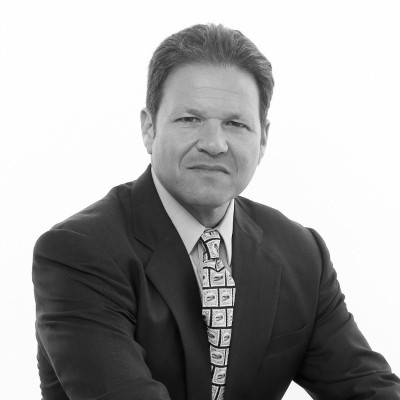
In this episode, I talk with Ron Homer – Chief Strategist for U.S. Impact Investing at RBC Global Asset Management, and one of the earliest architects of community development investing in the United States.
For nearly five decades, Ron has been redesigning how capital flows not just to generate returns, but to rebuild trust, opportunity, and ownership in communities that capital left behind.
That mission started in the Bedford-Stuyvesant section of Brooklyn, New York, where his parents, Caribbean immigrants from Jamaica and Trinidad, had settled years earlier, arriving in the U.S. as young dreamers.
He grew up in Bedford-Stuyvesant at a time when the neighborhood was changing fast. What had been a mostly white area became almost entirely Black by the 1960s. But as more Black families moved in, federal mortgage support dried up. The FHA, a U.S. government agency that was supposed to make home loans more affordable, refused to insure mortgages in neighborhoods where Black families lived, based on the assumption that property values would fall. So even people who could afford a home couldn’t always get a loan.
As a result, homeownership gave way to absentee landlords. Public housing developments rose. Services declined. “It wasn’t so much because of the people, but because of the lack of services, the lack of care and sense of community that took place over that period of time.”
That wasn’t a market failure. It was a policy choice. And it stuck with him.
But he also remembers moments of light. Like when Robert F. Kennedy visited the neighborhood in the mid‑1960s and launched the Bedford-Stuyvesant Restoration Corporation. The program brought visible change: freshly painted doors, simple signs of care, and a restored sense that pride and improvement were still possible. “For the first time, it felt like people cared about the community.”
A few years later, while a student at the University of Notre Dame, Ron was invited to join RFK’s motorcade during a campaign stop in South Bend. He spent over an hour in the car with Bobby and Ethel Kennedy, driving through two neighborhoods – one mostly white and poor, where Ku Klux Klan members still lived, and the other mostly Black and poor, with its own history of struggle. People lined the streets… waving… cheering… hoping this man might bring change.
What stuck with Ron wasn’t just the politics. It was the contrast. Two neighborhoods, different on the surface but united in what they lacked, and in what they still believed was possible.
When he entered Notre Dame, he initially planned to study medicine. But it didn’t take long for him to realize that wasn’t his path. He switched to psychology, and what he saw about human behavior pointed him in a new direction.
Through his psychology background, he realized that money and capital are big motivators. That realization would eventually reshape his life’s work: redirecting capital to help communities change from within.
After graduation, he ended up in Boston, where he began a career in banking with an unusual lens: he wanted to use finance to restore places like Bed-Stuy. He eventually became COO of the Boston Bank of Commerce, one of the largest Black-owned banks in the country.
But he realized early that capital alone wasn’t enough. You could fund homes, but without pride, opportunity, and ownership, “you’re just warehousing people”.
So, in 1997, he co-founded Access Capital Strategies with the goal of creating market-grade, fixed-income products that were community-aligned. His idea was to use the same mortgage-backed security structure that powered Wall Street, but build it around loans made to low- and moderate-income borrowers – targeted, transparent, and with no compromise on credit standards.
The model didn’t ask for concessionary returns or rely on charity. It simply showed that you could structure institutional-grade portfolios that delivered both financial performance and community impact.
Early investors included Michael Porter, Peter Lynch, and Fannie Mae, which brought credibility to the strategy at a time when few were paying attention to this kind of innovation.
In 2008, Access Capital Strategies was acquired by RBC Global Asset Management. When the global financial crisis hit shortly after, Ron’s portfolios outperformed, especially for clients like New York City. “We were the highest performing investment – made 10% – because people who had 30-year fixed-rate mortgages and were buying them for shelter didn’t default,” he explained.
Today, Ron leads RBC’s U.S. impact investing strategy, part of a fixed income platform with about $80 billion AUM. His team oversees about $3 billion in community investment strategies. These include customized portfolios primarily composed of agency-backed mortgage securities targeted at low- and moderate-income borrowers, as well as allocations to SBA loan securitizations and municipal bonds.
And the results are measurable: over 50,000 individual homes financed, tens of thousands of affordable multifamily units, and for institutional clients like the City of New York, quarterly reports that track each dollar to the specific mortgage, census tract, borrower income level, and racial demographics, down to the loan level.
But data only tells part of the story. What keeps Ron going is something deeper: the ripple effect.
He believes homeownership and small business act as beacons within communities and signals that things can change. “If you have one or two people who take pride in their home… maybe that becomes three people and four people and five people,” he said. That’s how change takes root, with visible progress that others want to join.
Ron is also deeply aware of the psychological barriers that shape both communities and investors. He sees what he calls “conditioned helplessness”, a kind of behavioral resignation that sets in when people stop believing their efforts will make a difference. It’s not about capacity. It’s about belief.
“Some people think the only way to get money is through concessions. But the community doesn’t need concessions. They need access.”
At the same time, he’s learned how hard it is to get even well-intentioned investors to try something new, especially if it looks different from what they’re used to. That’s why communication and education have become increasingly important in his work. “You can have the best cure around, but if you can’t communicate it and convince other people, it doesn’t matter.”
Ron didn’t invent impact investing. But he helped prove it can work, not just morally, but financially. And he did it by choosing reform over revolution, trusting the data, and never letting go of the lesson from Bed-Stuy: that pride and ownership, applied the right way, can change everything.
Listen in for the full conversation.
–
Listen to the episode on Apple Podcasts, Spotify, Overcast, Podcast Addict, Pocket Casts, Castbox, YouTube Music, Amazon Music, or on your favorite podcast platform. You can watch the interview on YouTube here.



What was your favorite quote or lesson from this episode? Please let me know in the comments.
SHOW NOTES:
[00:00] Introduction
[04:04] Childhood in Bed-Stuy shaped community awareness
[13:32] Bobby Kennedy’s influence on civic purpose
[17:46] Realization that poverty is rooted in economics
[21:39] Early banking work focused on underserved communities
[26:04] Lessons from failed housing project in Rochester
[38:01] Creating the first community-focused mutual fund
[45:59] RBC acquisition of Access Capital and its impact
[48:56] RBC’s niche strategy in fixed income markets
[51:32] Evolution of Access Capital post-acquisition by RBC
[54:06] Using fixed income to drive community development
[57:36] Measuring impact with loan-level demographic data
[01:03:45] Financial education and trust in underserved communities
[01:07:02] Shifting investor appetite in impact investing trends
[01:08:18] Social change requires belief, not just housing
[01:10:01] Wealth gap is the biggest opportunity for impact
[01:10:59] Personal turning point: Bed-Stuy community uplift
[01:12:48] Rapid fire questions
Additional Resources:
MORE QUOTES FROM THE INTERVIEWS:
“I realized that most social problems are rooted in economics and a lack of opportunity. And I saw I was a reformist, not a revolutionary. ”
— Ron Homer
“The failure isn’t that finance can’t solve social problems – it’s that we haven’t applied it strategically or consistently. The real obstacle is willpower, not complexity. ”
— Ron Homer