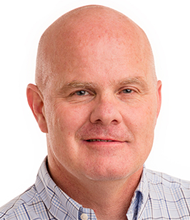

“In the absence of government subsidy, consumer Greenium, philanthropic capital, or a truly innovative business model, it’s impossible to deliver impact at market rates of return – the holy grail of great returns and great impact. ”
— Richard Brandweiner
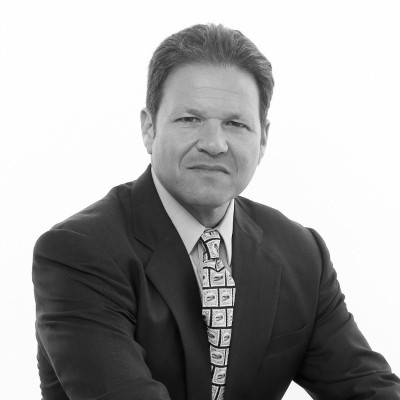
In this episode, I talk with Richard Brandweiner, the Chair of Impact Investing Australia, a non‑executive director at Australian Ethical, and one of the clearest and most candid thinkers on the promise and limits of impact investing.
Richard calls himself “the most lucky, blessed human in the world.” And he means it.
His parents (each shaped by the trauma of World War II) met in South Africa after leaving Europe. They built a new life from almost nothing. That life eventually brought them to Australia, a place Richard still calls extraordinarily egalitarian.
There, he grew up with the kind of stability and education his parents never had. And ever since, he’s carried the weight of that inheritance: the fragility of survival and the responsibility that comes with good fortune.
Richard’s early ambitions were miles away from finance. He wanted to make films. But his father insisted he get “a degree in something sensible,” so he chose economics, hated the coursework, ran the campus beer society, failed more subjects than he passed…
And then he had to grow up fast when his father died, and he stepped in to run the family’s hairdressing businesses at age 20.
Those years taught him business and pushed him deeper into markets, something he’d already started exploring years earlier. He was trading shares in high school, calling stock quotes from a public phone booth, even living through the 1987 crash as a teenager.
After stepping away from the family business, Richard drifted into finance almost by accident. He took a data entry job at Assirt, a manager research firm, and quickly started writing fund evaluations, mainly on multi-manager strategies.
That’s where he caught the bug. The more he learned about how capital gets allocated, the deeper he went.
Eventually, that path led to Perpetual, one of Australia’s largest asset managers, where he spent over a decade. There, he led multi-asset and income portfolios and helped build the firm’s first sustainable investment strategy in 2003. Back then, there was zero ESG hype, but the idea that capital could shape positive real-world outcomes started to take root.
In 2013, he became Chief Investment Officer of First State Super – now Aware Super – one of Australia’s largest pension funds with over $75 billion AUM.
Although most of the fund’s portfolio was tied up in traditional assets, one opportunity caught his eye: an affordable housing project under a government scheme that offered tax credits to build lower-rent homes. That was the moment he realized capital could directly improve people’s lives and still deliver the kind of returns big funds are built to expect.
There, he also came across the idea of universal ownership. It was the simple but powerful notion that when you’re a fund that big, you don’t just own a portfolio, you own a slice of the whole system. And if that’s true, then second‑ and third‑order effects don’t stay out there forever. They come back into your portfolio whether you planned for them or not. From that point on, he started factoring those ripple effects into every investment decision the fund made.
Richard tried to take that same thinking further at LeapFrog Investments. He worked on designing what he called a Trojan horse: a listed-equity strategy that looked conventional on the outside but quietly surfaced the positive ripple effects often ignored in traditional investing. The idea was smart: tuck impact into the frameworks big investors already understand. But the timing and infrastructure just weren’t there yet.
The Trojan horse didn’t launch, but he brought the idea to Pendal Group, one of Australia’s biggest independent asset managers. As CEO, he led the acquisition of Regnan, a long-established ESG research shop, and turned it into something more. Under his leadership, Regnan evolved from pure analysis to managing capital, launching impact strategies focused on listed companies that could deliver strong returns and help address real-world challenges.
Today he channels his energy into system-level work: chairing Impact Investing Australia, serving on the board of Australian Ethical, exploring blended finance models with government actors, and helping Indigenous communities structure long-term capital on their own terms.
Across all of it, he wrestles with a central truth: impact at scale requires confronting trade‑offs honestly. As he says, “Hope is not sufficient… we need to be more thoughtful about how to construct investment strategies that actually deliver what we’re saying they deliver.”
Richard is still pushing. Still trying to move the system. Still pointing out where incentives don’t line up and where ESG data falls short.
This conversation is full of hard-earned insights. About humility in leadership, the realities of scale, the friction between good intentions and institutional behavior, and many other truths the system doesn’t like to admit.
But more than that, it’s about a deeper reckoning: that once you understand the power capital holds, you don’t get to pretend it’s neutral anymore. And if you’ve been lucky, I mean really lucky, then using that power wisely becomes the whole point.
Listen in.
–
Listen to the episode on Apple Podcasts, Spotify, Overcast, Podcast Addict, Pocket Casts, Castbox, YouTube Music, Amazon Music, or on your favorite podcast platform. You can watch the interview on YouTube here.



What was your favorite quote or lesson from this episode? Please let me know in the comments.
SHOW NOTES:
[00:00] Introduction
[03:54] Parents’ WWII survival shaped Richard’s moral compass
[08:06] Studied economics at the University of New South Wales
[10:44] Trading shares through the 1987 market crash in high school
[13:15] Career in Perpetual Investments and creating the first sustainable fund
[17:34] Becoming CIO at First State Super in 2013
[19:34] Affordable housing fund idea sparked impact focus
[33:29] Structural issues in asset owner systems
[38:35] Transition from CIO to Leapfrog impact role
[42:04] Challenges launching institutional-grade impact fund
[43:54] Becoming BT CEO and integrating Regnan’s early ESG legacy
[48:29] At Regnan, the impact case is the investment case
[54:18] Regnan’s measurement approach and SDG taxonomy
[58:37] Impact Investing Australia – mission and focus
[01:04:55] Making impact the third axis in finance
[01:09:22] Ethical vs ESG vs impact investing
[01:12:16] How Australian Ethical outperforms with values-led investing
[01:14:00] Governance for Aboriginal community investment and autonomy
[01:21:38] Structural barriers to scaling impact investing globally
[01:32:08] Communication and accounting gaps in environmental costs
[01:35:37] Rapid fire questions
Additional Resources:
MORE QUOTES FROM THE INTERVIEWS:
“When I realized we could make good money, achieve strong returns, and help increase the development of affordable housing – putting people into homes using the skills I had – that was a big moment for me. ”
— Richard Brandweiner
“If externalities are properly priced into earnings, then you don’t need impact investing, it’s just investing. ”
— Richard Brandweiner