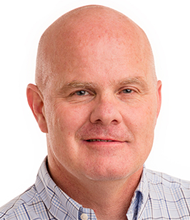

“A lot of people oversold the idea that if you buy an ESG product, you’ll make more money – without necessarily having the data to back that up. That was a mistake that eventually did a lot of damage to those of us who were actually doing rigorous work. ”
— Laura Segafredo
My guest today is Laura Segafredo – Chief Growth Officer at NatureAlpha, and a systems thinker who’s spent the last twenty years connecting science, policy, and capital to build tools that help finance face the realities of the climate crisis.
Her story begins in Padova (northern Italy), in a household that mixed science, art, and an instinct for justice. Her father was an engineer at the national power company and taught her to see the grid behind everything – even turning family road trips into lessons in voltage and transmission lines. Her mother, a teacher with a deep passion for history and the arts, sparked her curiosity about culture and context.
Both were rooted in a form of Catholicism focused on social justice, which Laura says gave her “a very keen sense of justice and injustice” – something that still shapes her work today.
Laura chose to study economics, not for love of the field, but because it opened doors to international work. She wanted to be useful.
That clarity sharpened when a university professor offered a provocative example: “What if a forest fire increases GDP? Is that good?” The question unsettled her. And the idea of a “Green GDP” – one that accounted for nature’s losses – stuck with her and changed how she saw economics.
During her undergraduate years at the University of Padova, Laura spent time studying in Wales and at UC Berkeley, where the California energy crisis sparked her interest in how power systems and market incentives connect. She went on to earn a PhD in Energy Studies at the University of Padova and a master’s in Industrial Economics at the Toulouse School of Economics.
It was the mid-2000s – climate work wasn’t yet a clear career path – but she began as a research economist at Électricité de France in Paris, studying how regulation and technology shifts were transforming power markets. She later moved to California, where she joined the ClimateWorks Foundation as a senior economist, contributing to the UNEP Emissions Gap Reports and the Deep Decarbonization Pathways Project at Columbia University – part of the broader international research that informed climate policy discussions around the Paris Agreement period.
Then came a call from BlackRock. The firm was expanding its sustainable investing platform and needed someone who could turn emerging sustainability data into investment strategies.
Laura joined the fixed income team – a space she described as “like waking up in 1950.” ESG in bonds was barely a thing. There were no clear standards. But clients, especially in Europe, were starting to ask serious questions, and portfolio managers didn’t have good answers.
Laura and her team got to work. They launched green bond ETFs, developed a shading system to assess bond quality, and created tools to track real-world impacts. They built ESG frameworks across all types of bonds: municipal, sovereign, and securitized. Over time, what began as a niche effort became central to BlackRock’s approach to sustainable fixed income.
In 2021, she moved to lead sustainable product and portfolio research across iShares – BlackRock’s index platform. There, she helped vet ESG datasets, set product standards, design performance research, and ensure compliance with fast-evolving regulations. When she joined the iShares team, ESG-linked AUM was around $110 billion. By the time she left, it had surpassed $500 billion.
But scale didn’t mean stability. By 2023, ESG had become politically charged. Backlash was mounting – from both outside and inside the firm. Each new product, dataset, or framework brought new legal and reputational risks. The space for innovation narrowed. And eventually, it was time to move on.
After nearly a decade at BlackRock, Laura took a leap – from the world’s largest asset manager to NatureAlpha, a small startup using geospatial data to bring nature into investing.
There, she’s helping investors understand how companies depend on and impact natural systems – like water, soil, and biodiversity – and what happens when those systems start to break down. Most portfolios have never seen this data. Now they can.
NatureAlpha’s core product is Geoverse 2.0 – a geospatial AI tool that analyzes 8.5 million asset locations worldwide, tagging each with indicators of ecosystem health and how much a company depends on nature. It uses a quadrant model to flag the danger zone: places where companies are highly dependent on ecosystems – like rivers, forests, or soil – that are already deteriorating. That’s where risk concentrates – high dependency, low resilience.
The idea is to turn that risk into insight. Geoverse doesn’t just map individual assets – it scans entire portfolios, helping investors see exposures they’ve never seen before.
Through partnerships with data providers and platforms like ICE – and collaborations across the wider investment ecosystem – NatureAlpha is working to make its nature-related insights more accessible to investors within the tools they already use.
That unlocks what Laura calls the “double dividend”: portfolios that reduce nature-related risk and keep pace with market returns.
Still, Laura doesn’t overpromise. If there’s one lesson she’s carried from the ESG battles, it’s this: be transparent about what you know, and even more about what you don’t. “There’s always stuff we couldn’t have known,” she said, “but the stuff that we could have known – we stress-tested.”
Today, she’s pursuing a second master’s degree in theology and ecology at Princeton Theological Seminary. She’s still in finance, but felt called to explore its deeper ethical roots – to understand the moral and spiritual questions underneath the systems we build.
She’s studying eco-theology, writing essays, and speaking to philosophers, post-growth economists, and faith leaders. She’s trying to understand not only how we got here, but how we might find our way back.
Her work lives in tension: between science and theology, between complexity and clarity, between deep systems thinking and actionable investing. And she’s found a way to hold it all – not perfectly, but with clarity and care.
For the capital allocators listening – my conversation with Laura goes way beyond ESG.
It’s about what shifts when you zoom out from carbon and start seeing nature not as scenery, but as infrastructure. When rivers, forests, and soil stop being externalities and start showing up on the balance sheet.
If you tune in, you’ll also hear what made her lose faith in market-based climate solutions, what the biggest lie the industry tells itself, and why the next big revolution in investing may be a moral one.
Because in the end, Laura’s not trying to build better ratings or cleaner tickers. She’s trying to build a better world – one that we might actually want to invest in.
It was an early glimpse of the purpose that would become her north star.
Listen in.
–
Listen to the episode on Apple Podcasts, Spotify, Overcast, Podcast Addict, Pocket Casts, Castbox, YouTube Music, Amazon Music, or on your favorite podcast platform. You can watch the interview on YouTube here.



What was your favorite quote or lesson from this episode? Please let me know in the comments.
SHOW NOTES:
[00:00] Introduction
[03:50] Childhood influences blending science, art, and justice
[07:23] Choosing economics to open international career pathways
[09:00] A classroom challenge to GDP changed everything
[10:48] Pursuing dual graduate degrees in energy and economics
[13:57] Leading global climate plans that became Paris Agreement’s foundation
[28:02] Joining BlackRock to embed ESG principles in fixed income investing
[35:34] ESG integration challenges in bond markets and client demand
[39:47] Scaling sustainable ETF/index funds from $110B to $500B
[45:34] Navigating ESG backlash, political pressure, and internal scrutiny
[54:27] Transitioning to Nature Alpha
[59:51] Nature Alpha provides infrastructure to assess nature-related risk
[01:04:59] Geoverse 2.0 maps nature risks across portfolios globally
[01:05:42] High-risk quadrant model
[01:16:10] Partnerships with ICE and MSCI
[01:22:19] Double dividend: reduce nature risk, preserve returns
[01:23:58] Lessons from climate to biodiversity investing
[01:26:14] Skepticism about market-based carbon solutions
[01:29:29] Launching the Moral Revolution podcast project
[01:33:37] Why economics needs moral language again
[01:46:48] Rapid fire questions
Additional Resources:
MORE QUOTES FROM THE INTERVIEWS:
“In traditional textbooks, you’re taught that economists shouldn’t even consider moral questions. It’s all about efficiency – and you don’t really care how you get to that efficiency. ”
— Laura Segafredo
“When it comes to risk in a portfolio, what you’re really interested in is the quadrant where there’s both high dependency on an ecosystem and that same ecosystem is at high risk of deteriorating. ”
— Laura Segafredo