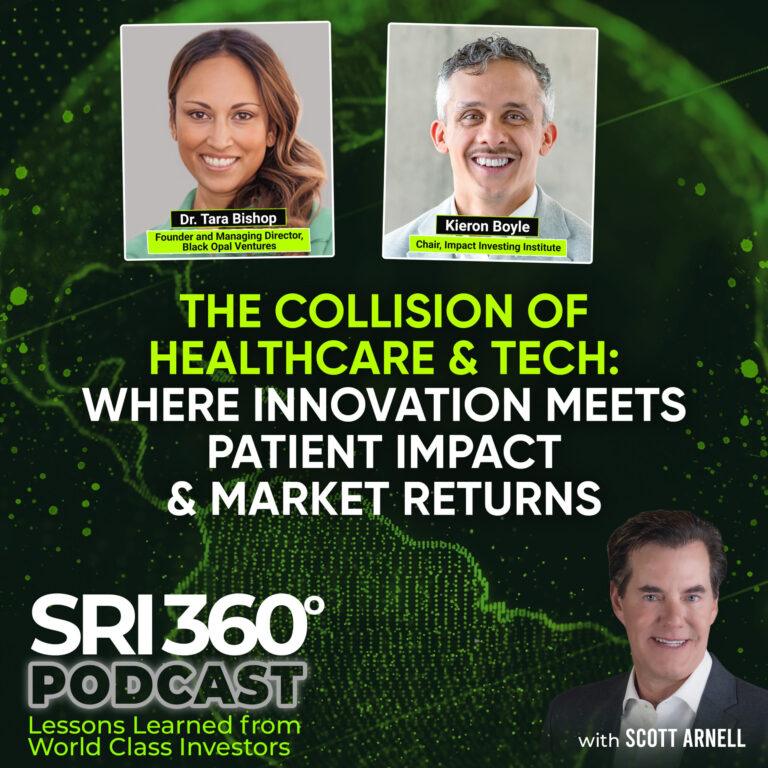
“Access doesn’t need to mean that we are providing free care or care at significantly lower cost. It’s that we’re providing care for a group of patients or a market that’s just not getting the things that they need. ”
— Tara Bishop
Healthcare is filled with breakthrough claims. But most of what gets funded doesn’t make it anywhere near a hospital ward, a low-income patient, or a parent juggling three jobs. The gap between what’s possible and what’s actually useful is real – and these two investors are trying to close it.
In this 2-in-1 compilation, we revisit two conversations with fund managers who are focused on problems that actually matter: the rising cost of care, the complexity of getting it, and the systems that still leave too many people behind. Their portfolios include diagnostics that reduce medical error, wearables that predict seizures, virtual platforms that help people manage chronic illness, and yes – even robotics that could expand access to fertility care.
But this isn’t just about cutting-edge tech. It’s about a bigger question: how do you create health? And what role do businesses – and the investors backing them – play in that? Because at the end of the day, a healthier population isn’t just good policy. It’s good business. It’s good investing.
The thesis here is ambitious but clear: back the companies solving real problems, at scale, and prove you don’t have to trade off returns to make a measurable difference.
Here are the featured guests:
Dr. Tara Bishop, Founder and Managing Director, Black Opal Ventures
Tara Bishop is investing at the collision point – where healthcare and technology meet, and where legacy capital still struggles to keep up. At Black Opal Ventures, she’s backing startups that don’t just make care more digital – they make it more intelligent, more precise, and more accessible.
Black Opal is one of the few female- and minority-led VC funds in the health-tech space. Tara and her partner Eileen Tanghal bring deep domain expertise – medicine on one side, deep tech on the other – and they’re targeting high-impact companies that address the big four in healthcare: cost, quality, access, and security.
Every investment is built around the same goal: getting the right care to the right patient at the right time – at a cost that works. And they’re delivering Black Opal double-digit returns in the process.
For Tara, impact means solving problems that have outlasted decades of reform – inside what she calls a “behemoth of an industry” that affects lives at scale and rarely rewards innovation that puts patients first.
Full episode here.
Kieron Boyle, Chair, Impact Investing Institute
Kieron Boyle has spent years making the economic case for better health. At Guy’s and St. Thomas’ Foundation, he helped turn an 800-year-old endowment into a £100 million impact portfolio – funding everything from healthier food startups to housing for women and children at risk. Not because it’s charity. Because it’s smart investing. Because a healthier society is more productive, more resilient, and more investable.
His work started with a simple question: most of what drives health doesn’t happen in hospitals – so why should health investing stop at hospital walls? The team backed medical technologies and life sciences, yes – but also addressed the wider commercial determinants of health: food, air, housing, debt. Then they went further, pioneering a dual mandate that put health and financial return on equal footing.
Now, as Chair of the UK’s Impact Investing Institute, Kieron is scaling that thinking. He’s working with long-term investors – including pension funds and sovereign wealth – to align trillions in assets with the outcomes that actually shape wellbeing: healthier people, stronger communities, and more sustainable systems.
Full episode here.
Listen to the episode on Apple Podcasts, Spotify, Overcast, Podcast Addict, Pocket Casts, Castbox, YouTube Music, Amazon Music, or on your favorite podcast platform. You can watch the interview on YouTube here.



What was your favorite quote or lesson from this episode? Please let me know in the comments.
SHOW NOTES:
[00:00] Introduction
[04:13] Overview of Black Opal’s mission and investment thesis
[09:11] Theory of change: access, cost, quality, security issues
[11:47] Vision for a “brilliant tomorrow” in healthcare
[15:04] Why healthcare-tech investing differs from general tech VC
[17:41] Balancing access, impact, and financial returns
[22:27] Investment process and deal evaluation approach
[37:51] How the scout program supports deal sourcing and access
[46:36] AI’s role in transforming the future of health tech
[48:46] Origins and mission of Guys & St. Thomas’ Foundation
[52:05] Using endowment capital for systemic health impact
[56:33] Shift to portfolio-wide dual mandate strategy
[01:03:08] Limits of capital in addressing social problems
[01:13:16] Launch and purpose of Impact Investing Institute
[01:21:30] Institute’s future goals and capital mobilization target
MORE QUOTES FROM THE INTERVIEWS:
“Financial insecurity and illness go hand in hand. If you lose your job, it’s hard to keep your health. If you don’t have great health, it’s hard to keep a job. ”
— Kieron Boyle
“Healthcare has always wrestled with the triangle of access, quality, and cost. The holy grail – something I’ve chased my whole career – is achieving that perfect equilibrium: accessible, high-quality care at lower cost. ”
— Tara Bishop