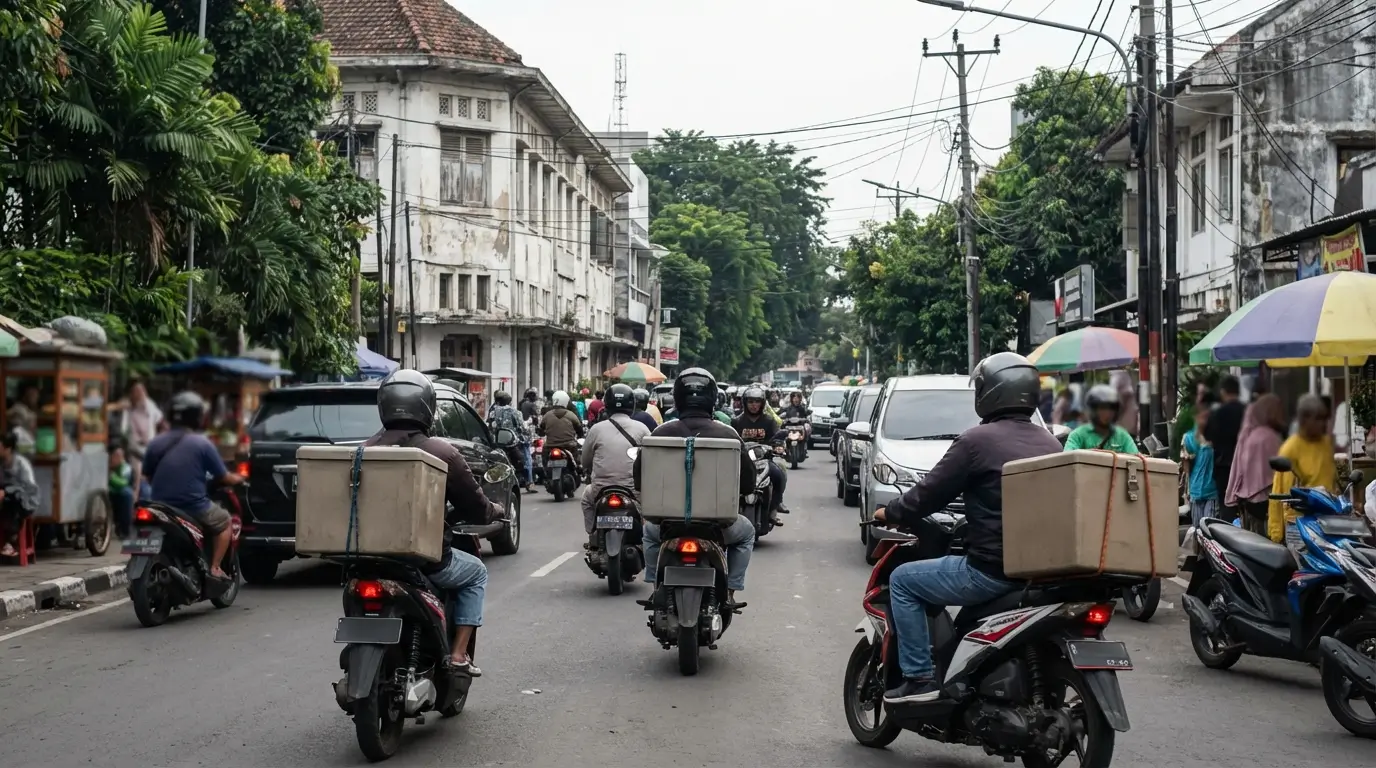
Among the many structural barriers that have historically prevented Latin American agriculture from realizing its full productive and climate potential, access to capital has consistently ranked near the top. Farmers who can demonstrate years of profitable harvests, manage hundreds or thousands of hectares, and sell into global commodity markets have still found themselves paying punishing interest rates for short-term working capital, locked out of longer-term investment financing, or forced into exploitative barter arrangements with multinational input suppliers.
The dysfunction is not incidental. It is structural, rooted in a financial system that has never fully learned to underwrite agricultural risk. The companies changing that are not banks. They are technology platforms, built by founders who understand both farming and finance, and backed by a new generation of specialist investors who see agricultural fintech not just as a financial services opportunity but as the enabling infrastructure for a broader climate transition.
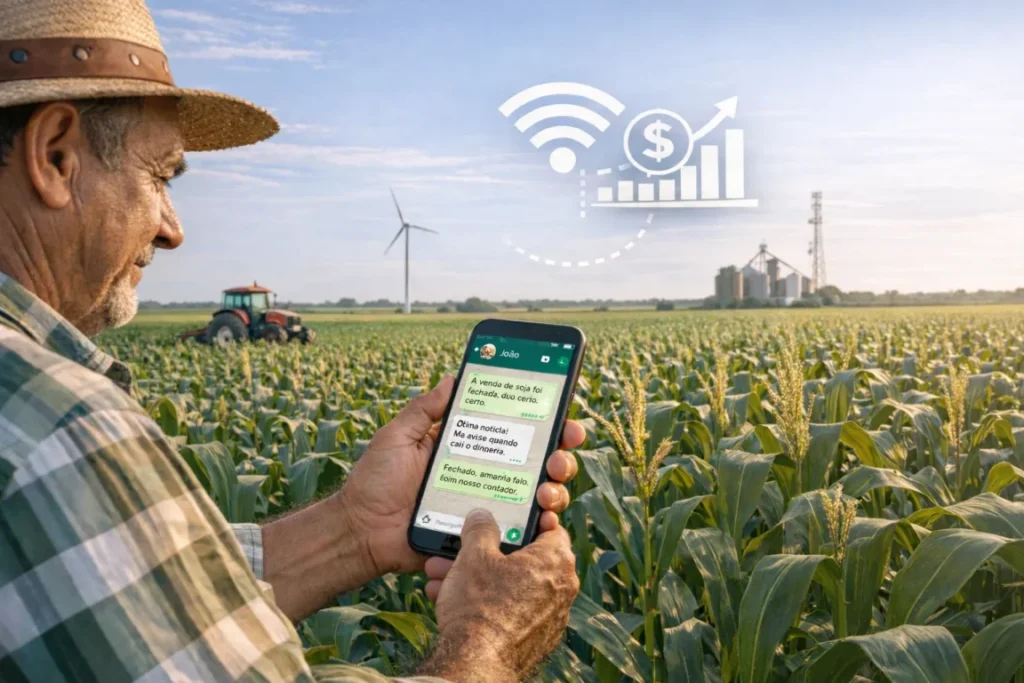
Brazilian farmers are among the most active WhatsApp users in the world, and agra fintech platforms are building directly on top of that behavior, embedding credit applications and agronomic advice into the interface farmers already trust.
I spoke with Francisco “Chico” Jardim, General Partner at SP Ventures, whose firm deployed 35% of its second fund into agricultural financial services, making it the single largest thematic allocation in that vehicle. Jardim describes the convergence of Brazil’s increasingly sophisticated capital markets, its world-class fintech ecosystem, and the urgent need for climate-linked agricultural financing as one of the most consequential investment dynamics he has encountered in nearly two decades of operating in the space.
The Credit Problem That Has Always Been There
The scale of the agricultural finance gap in Latin America and the Caribbean is not a niche data point. The MSME financing gap across the region stands at approximately USD 100 billion, the second largest such gap globally. The OECD estimates that closing the broader food system financing gap in the region alone requires an injection of USD 98 billion annually. Globally, the agricultural finance gap specifically impacting smallholder and mid-tier farmers is estimated at USD 170 billion.
Within Brazil, the gap between macro-level agricultural ambition and farm-level credit access has historically been most acute for mid-tier producers. Large commercial operations can issue Agribusiness Receivables Certificates, known as CRAs, directly on capital markets or access favorable terms from major commercial banks. Small subsistence farmers are partially covered by government programs like PRONAF, the national family agriculture credit line. The middle segment, commercially sophisticated enough to require real growth capital but too operationally complex for standardized bank products, has long been chronically underserved.
As Jardim described it, the capital markets in Brazil, despite being the most developed in Latin America, are only beginning to understand agriculture. When the first wave of private investors started entering the sector following the FIAGRO regulatory reform, they encountered a steep learning curve. They did not understand cyclicality. They did not understand commodity price forecasting. They did not understand the ratio between input prices and output prices that determines farm profitability. They did not understand the logistics infrastructure gaps that make freight pricing a critical and unhedged risk for Brazilian farmers. The knowledge gap between the investment community and the farming community has been as significant a barrier to capital flow as any regulatory constraint.
Why Traditional Banks Cannot Solve This
Traditional commercial lenders face a structural mismatch when attempting to serve agricultural borrowers in emerging markets. The US State Department’s 2024 Investment Climate Statement on Brazil documents the specific friction points: extreme geographic dispersion making physical farm appraisals expensive, inherent exposure to unpredictable biological cycles and localized weather shocks, severe global commodity price volatility, and an institutional reliance on outdated risk-scoring models that prioritize physical real estate collateral over cash flow predictability.
The result is that traditional banks categorize agriculture as a high-risk sector and price their credit accordingly. For farmers whose input costs are priced in US dollars and whose revenues depend on global commodity markets outside their control, borrowing at rates that reflect a bank’s categorical aversion to agricultural risk is often more damaging than not borrowing at all.
Agricultural fintech platforms solve this by replacing the bank’s categorical risk model with a dynamic, data-driven underwriting approach. By leveraging satellite imagery, localized weather models, IoT soil sensors, and historical yield data, these platforms issue credit based on the verified biological reality and predictive output of the crop rather than demanding excessive physical collateral. They can underwrite loans in hours rather than months, service remote smaller-scale farmers efficiently, and build risk models that actually reflect the specific agronomic conditions of individual operations.
The FIAGRO Turning Point
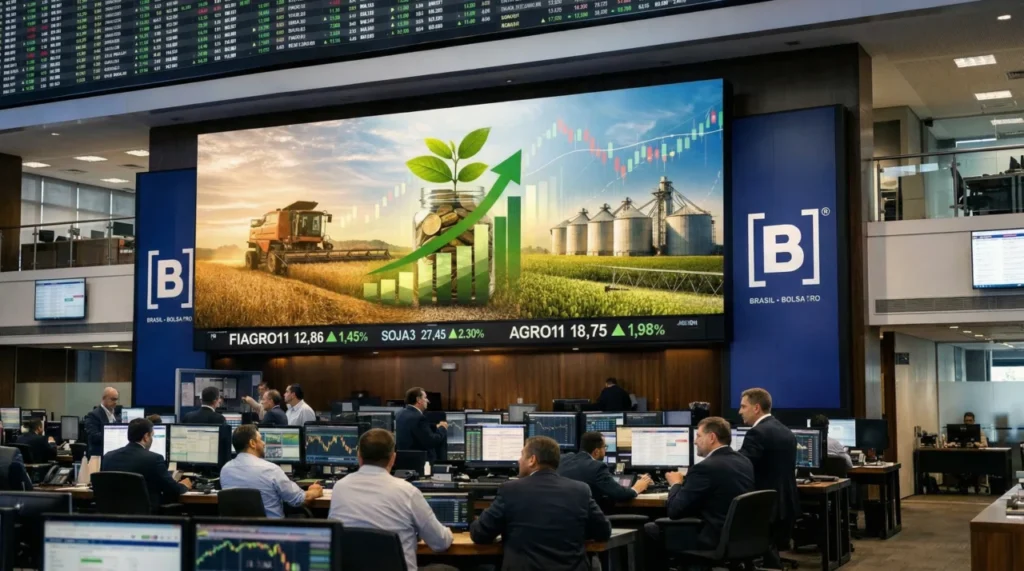
The introduction of FIAGRO allowed ordinary retail investors to participate in agribusiness yields for the first time, growing the market from BRL 10.5 billion to BRL 43.7 billion in just two years and permanently shifting how capital flows into Brazilian agriculture.
The regulatory change that most dramatically shifted the landscape for agricultural capital markets in Brazil was the introduction of FIAGRO, Investment Funds in Agroindustrial Productive Chains, a structure that functions similarly to a Real Estate Investment Trust but targets agribusiness receivables, rural properties, and agricultural credit rights.
By streamlining participation rules, the Brazilian Securities and Exchange Commission unlocked significant retail investor access to agribusiness yields. The results were rapid and substantial. FIAGRO’s net worth surged by 315% in just two years, climbing from BRL 10.5 billion in late 2022 to BRL 43.7 billion by 2024 and 2025. The broader market for the underlying CRA instruments reached BRL 153.5 billion in 2024. What had been a system almost entirely dependent on state-directed rural credit lines is now drawing in private capital at a pace that represents a permanent structural shift in how liquidity flows into the rural economy.
Jardim described this transformation as Brazil in the process of becoming one of the most sophisticated agriculture financing models in the world, a development that is converging with what he characterized as the most sophisticated fintech ecosystem in the world. That convergence is creating an investment environment unlike anything that has existed before in Latin American agricultural finance.
Blended Finance and the Responsible Commodities Facility
The most direct connection between agra fintech and concrete climate outcomes in the region runs through the Responsible Commodity Finance facility, or RCF. Conceptualized by BVRio and operated by Sustainable Investment Management, the RCF uses blended finance, mixing philanthropic, developmental, and commercial capital, to issue climate-linked credit to soy producers in the highly vulnerable Cerrado biome.
To access the facility’s concessional financing, farmers must legally commit to zero-deforestation cultivation, meaning they will not clear remaining forests or native vegetation even where legally permitted to do so. For the 2025 to 2026 season, the facility secured USD 60 million to finance 280 farms, directly facilitating the production of 240,000 tons of deforestation-free soy while actively conserving 90,000 hectares of native Cerrado savanna.
The capital structure making this possible includes a pivotal USD 85 million investment from the Green Climate Fund, which takes a subordinated first-loss position in the facility. By absorbing the initial default risk, the GCF dramatically lowers the risk profile for senior-tranche private investors, allowing the RCF to scale toward a half-billion-dollar total lending target by 2028. Rabobank serves as a key operational partner in structuring and distributing the facility’s credit.
One of SP Ventures’ portfolio companies, Tria, was among the seed-stage investments that helped pioneer this model. Jardim noted that the Responsible Commodity Finance program has been cited by senior leaders at Rabobank as the most successful blended finance program the bank has been able to deploy anywhere in the world. The Green Climate Fund has since approved the program for expanded deployment beginning in 2027.
The scalability of agricultural fintech across Latin America is not hypothetical. The digital infrastructure required to reach remote farmers is already in place, and the behavioral adoption of digital financial interactions among farming communities is already underway.
In Brazil, 88.9% of the population had a mobile phone in 2024, and mobile ownership in rural areas rose from 54.6% in 2016 to 77.2% by 2024. More importantly, the primary operating system of rural Brazil is WhatsApp. Rather than requiring farmers to navigate unfamiliar banking apps, leading agra fintechs are embedding credit applications, agronomic advice, and transactional commerce directly into the WhatsApp interface that farmers are already using daily for personal and business communication.
Jardim described AI-powered bots that engage farmers through WhatsApp with conversations about religion, football, and local events before smoothly transitioning to credit applications and product offers. These tools are available 24 hours a day, remember everything the farmer has previously discussed, and can be far more proactive about cross-selling and follow-up than any human sales operation operating within normal business hours.
The broader analog for this transformation is Nubank, the Brazilian neobank founded in 2012 and 2013 that now serves over 100 million customers, having disrupted a highly concentrated retail banking oligopoly by delivering zero-fee, cloud-based financial services directly to smartphones. Agricultural fintechs are building cloud-based underwriting engines that bypass the physical bureaucracy of state-owned agricultural banks in exactly the same way, removing branch overhead and digitizing origination processes to service remote borrowers efficiently and at scale.
Platforms like Traive, which has managed over USD 571 million in farmer loans using AI-driven risk monitoring, and Bart Digital and Sette, which are digitizing crop receivables using blockchain architecture, are early examples of what this infrastructure can do at scale. As the technology matures and regulatory frameworks continue to evolve in the direction that FIAGRO established, the combination of data-driven underwriting, digital distribution, and blended climate finance instruments is positioned to unlock capital flows into Latin American agriculture at a pace and volume that has no historical precedent in the region.
For climate investors trying to understand where their capital can generate both financial returns and measurable ecological outcomes in emerging markets, agricultural fintech in Latin America is not a speculative bet. It is the practical infrastructure through which the region’s most urgent climate finance challenge is being solved, one farm at a time.
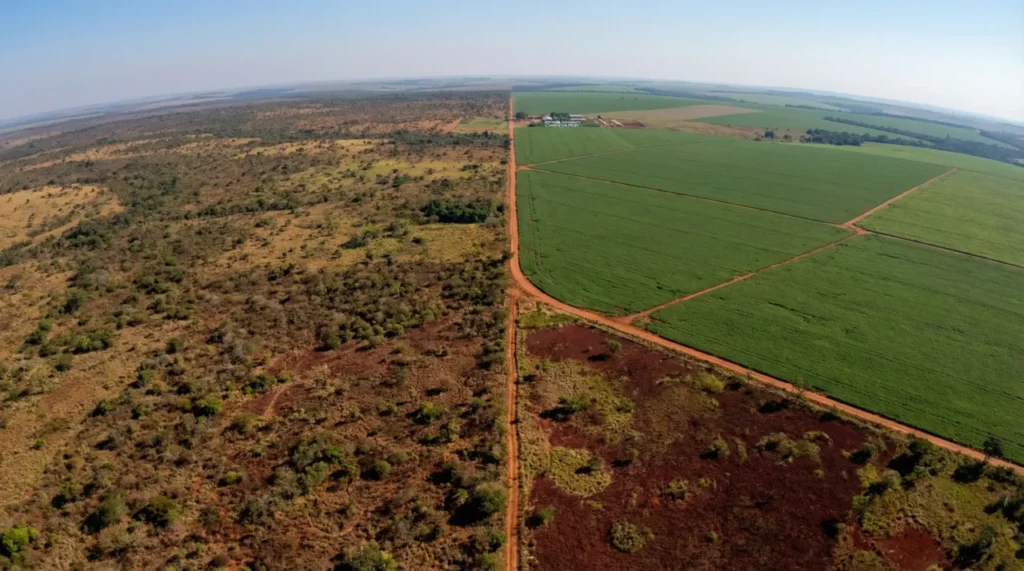
The Cerrado biome is both Brazil’s most productive agricultural frontier and one of its most ecologically vulnerable, making it the natural focus for the Responsible Commodities Facility, which ties access to concessional finance directly to zero-deforestation commitments.
Listen to the full conversation with Francisco Jardim on the SRI 360 Podcast.
For more interviews with leading voices in sustainable and responsible investing, visit the SRI 360 Podcast.