
“We can’t continue to invest and generate economic activity without regard for social and environmental impacts, because we now have growing evidence of the costs and systemic risks created by ignoring them for decades. ”
— Nick Hurd
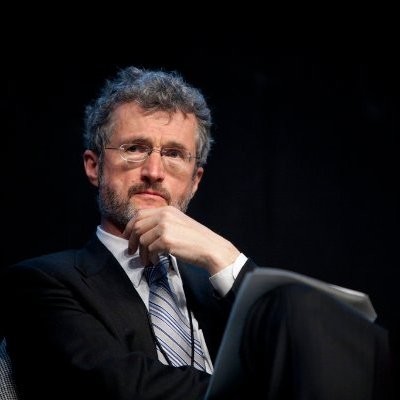
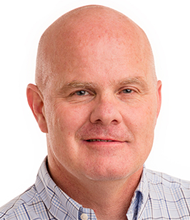
In this episode, I’m joined by Nick Hurd, Chair of GSG Impact, one of the rare people who has built impact markets from inside government and then helped scale them globally outside government.
We explore what systemic change actually looks like when you try to build it across politics, markets, and civil society at the same time.
Nick’s story starts inside public service long before he ever entered Parliament. He grew up in a household shaped by diplomacy, politics, and a deep sense of responsibility, moving between countries and absorbing early on how institutions shape outcomes.
That early exposure to different systems helps explain why his work has consistently focused on changing systems rather than individual interventions.
Before politics, Nick spent more than a decade learning how money works. He trained as an investor, worked with major UK pension funds, lived through the 1987 crash, and saw firsthand how risk, volatility, and incentives really drive behavior. That experience left him uneasy with a world where success was measured by tiny price movements while real structural problems grew untouched.
When he eventually entered the UK Parliament, climate change became his first deep focus. At the time, it was still politically fragile, built on uncertain science and long-term tradeoffs. He worked on the legislation that made the UK one of the first countries to put climate targets into law, with five-year carbon budgets and independent oversight.
That framework still anchors UK climate policy today and showed him how accountability can outlast political cycles.
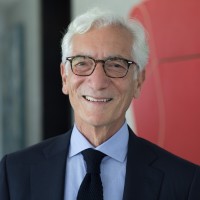
As Minister for Civil Society, Nick helped build the UK’s social investment market, including the creation of Big Society Capital, working alongside pioneers such as Sir Ronald Cohen and Nick O’Donohoe who helped shape the model.
Big Society Capital was funded by dormant bank accounts and bank commitments. The goal was simple: give social organizations access to patient, flexible capital so they could focus on outcomes instead of fundraising. It was one of the first large-scale experiments in impact investing backed by a national government.
Out of that work came another breakthrough: social impact bonds. Instead of paying for activity, government would pay only when outcomes were achieved. Investors provided the upfront capital. Civil society delivered the work. Government paid for success.
These structures were tested in areas where failure was already expensive and visible, like keeping people out of jail, reducing homelessness, and supporting children in care. In Greater Manchester, the model delivered better outcomes at roughly 60% of the original cost.
Over time, this outcomes-based approach was piloted in more than 35 countries, reshaping how public money could be used when aligned with private capital and social delivery partners.
Later, Nick carried these ideas into international development and climate finance. At the Department for International Development, and later as Minister for Climate Change at the Department for Business, he saw that emissions goals and social outcomes are inseparable. Energy transitions that ignore people and places create political backlash, social risk, and fragile outcomes.
That insight now underpins his view of climate finance: social outcomes and emissions outcomes are inseparable. He came to see that investment in technology has to be matched by investment in people, or the transition simply doesn’t hold politically or socially.
In 2019, he left politics after 14 years, convinced that the biggest untapped lever for systemic change sat in how markets allocate capital, not in another turn of the policy cycle.
Since then, he’s chaired the Access Foundation, helped mobilize blended finance for underserved communities, and led global efforts to scale impact investing through GSG Impact, now active in nearly 50 countries.
His focus has shifted toward building impact ecosystems, aligning incentives, and creating transparency so capital can move with confidence into areas like climate finance, social investment, and SME development.
Nick chaired the G7-backed Impact Taskforce and later succeeded Sir Ronald Cohen as chair of the Global Steering Group for Impact Investment (GSG Impact). That puts him close to the plumbing of impact investing: standards, trust, policy levers, and the hard work of getting large institutions to treat impact measurement seriously without turning it into box-ticking.
Nick’s experience clearly shows: Markets don’t change because of moral appeals. They change when incentives, information, and accountability line up. That’s why Nick keeps returning to tools like outcomes funds, social impact bonds, climate finance structures, and blended capital. They are mechanisms to actually move money.
This episode is about how systems change when incentives, information, and accountability are designed to work together. And why capital markets, not politics, are where those systems finally hold.
Listen in.
–
Listen to the episode on Apple Podcasts, Spotify, Overcast, Podcast Addict, Pocket Casts, Castbox, YouTube Music, Amazon Music, or on your favorite podcast platform. You can watch the interview on YouTube here.



What was your favorite quote or lesson from this episode? Please let me know in the comments.
SHOW NOTES:
[00:00] Introduction
[03:26] Growing up inside public service and political legacy
[08:37] Choosing finance over politics after Oxford
[12:59] Leaving institutions to build and work abroad in Brazil
[17:28] Turning to climate policy and social investment in Parliament
[20:39] Seeing inefficiency inside civil society funding firsthand
[23:50] Building Big Society Capital to create a new market
[28:05] How social impact bonds actually worked in practice
[36:06] Visualizing outcomes in prisons and homelessness
[42:48] Integrating social outcomes into climate finance
[48:59] The origins of GSG Impact and the capital gap
[53:18] Impact as PR vs. impact as math
[57:49] Why the just transition puts the social dimension back into climate finance
[01:01:09] How GSG Impact works globally
[01:10:01] Net zero pullbacks, ESG backlash, and the future of climate finance
[01:24:43] Rapid fire questions
Additional Resources:
- GSG Impact website
- Nick Hurd LinkedIn
- Access Foundation website
- Previous conversation with Sir Ronald Cohen here
- Previous conversation with Nick O’Donohoe here
MORE QUOTES FROM THE INTERVIEWS:
“Unless you transform the landscape of information and incentives, inertia will prevail. For those of us trying to change the system that allocates global wealth, one of our biggest enemies is inertia. ”
— Nick Hurd
“Transparency is a very powerful tool for improving investment decision-making, because information is power. The transparency agenda is a transfer of power, and once you give people power through information, it’s very hard to take it back. ”
— Nick Hurd