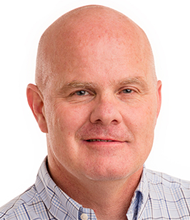

“Natural capital investing is about moving nature’s economic value into a real financial value. And if you can build a strategy around that and improve nature while also creating a return, then that’s the gold standard of natural capital investing. ”
— Martin Berg
Most investors now accept that climate risk is financial risk. But what about nature loss? What about the fact that half of global GDP is tied to the natural world – from soil health to pollination to forest carbon – and yet almost none of that value is priced into markets?
If climate was the first wake-up call, nature is the second. And it’s already here.
In this 3-in-1 compilation, we revisit past episodes with investors at the forefront of this shift. Each one is building strategies to bring natural capital into the financial mainstream – through listed equities, real assets, or nature-based carbon credits.
Together, they make the case that natural capital isn’t just about conservation. It’s about a full-spectrum approach to land, water, biodiversity, and the businesses that depend on them. It’s about building portfolios that align with the real economy – not just the one that shows up on balance sheets.
Here are the featured guests:
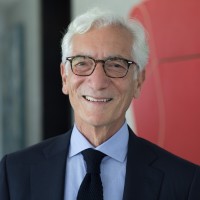
Martin Berg, CEO, Climate Asset Management
Martin is pushing to bring natural capital out of the margins and into the financial mainstream.
With over $650 million raised and three funds under management, Martin’s building a new category of real asset investing – one that spans sustainable agriculture, forestry, and nature-based carbon.
The firm’s strategies include land acquisition and restoration in developed markets, as well as carbon credit partnerships with smallholder farmers in emerging markets. Each is tailored to a different type of investor – but they share the same goal: aligning financial returns with measurable improvements in natural ecosystems.
Martin believes scale is non-negotiable. And to get there, he’s focused on long-term capital, rigorous impact data, and investment structures that reward sustainability over extraction.
Whether it’s replanting degraded farmland in Queensland or building biodiversity corridors between national parks, his team is proving that nature can deliver both yield and impact – at an institutional scale.
Full episode here.
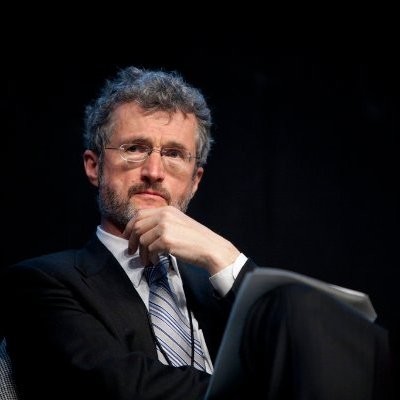
Ingrid Kukuljan, Former Head of Impact & Sustainable Investing at Federated Hermes
At the time of recording our original interview, Ingrid was Head of Impact and Sustainable Investing at Federated Hermes. In that role, she launched the Biodiversity Equity Strategy – the first biodiversity-themed fund in the listed equity space – grounded in a clear conviction: biodiversity is not just a moral concern, it’s a systemic economic risk.
Her team screened nearly 9,000 listed companies – the standard MSCI All World benchmark – and found only about 150 that qualified as biodiversity champions: businesses aligned with at least one biodiversity-linked SDG and actively working to preserve or restore nature.
The gap was striking. Ingrid pointed out that 80% of the UN Sustainable Development Goals depend on biodiversity, yet fewer than 20% are on track – and in the past 50 years, we’ve decimated biodiversity globally.
At the time of the interview, the fund had just under $50 million in assets. But Ingrid wasn’t focused on growing it quickly – she wanted to prove a point. Her team used a detailed KPI framework across emissions, water use, land conversion, and waste, making the case that public equities can play a vital role in financing nature-positive outcomes – and in helping restore ecosystems without compromising returns.
Full episode here.
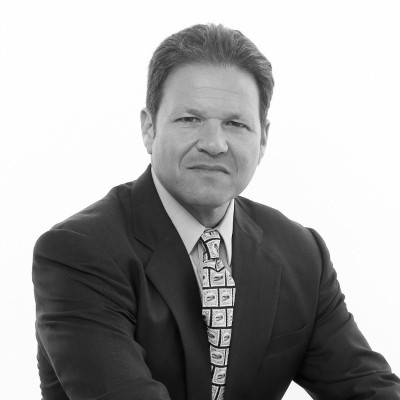
Helen Avery, Director of Nature Programmes at the Green Finance Institute (GFI)
Helen is working to make nature investable. As Director of Nature Programmes at the Green Finance Institute, she leads the GFI Hive – a dedicated platform focused on removing the barriers that keep private capital from flowing into nature. That means shaping the building blocks of nature markets – like biodiversity net gain, mitigation banking, and nature-based carbon – and helping define the standards, infrastructure, and policy frameworks that make them investable at scale.
Helen’s approach tackles the problem from both ends: accelerating capital into existing opportunities, and laying the foundation for a nature-positive economy over the long term. Her team supports the UK’s nature markets and investment readiness funds, partners with farmers and NGOs to build new business models, and works closely with corporates through the TNFD to help them assess their risks and dependencies on nature.
For Helen, it’s a systems-level challenge – and the next frontier of sustainable finance. Because in her view, the climate conversation has missed the point: if we’re not capturing nature risk, we’re not capturing climate risk at all.
Full episode here.
Listen to the episode on Apple Podcasts, Spotify, Overcast, Podcast Addict, Pocket Casts, Castbox, YouTube Music, Amazon Music, or on your favorite podcast platform. You can watch the interview on YouTube here.



What was your favorite quote or lesson from this episode? Please let me know in the comments.
SHOW NOTES:
[00:00] Introduction
[04:34] Scaling natural capital investing
[07:43] Land investment and carbon credit funding
[10:56] Nature investing helps address biodiversity and climate crises
[13:45] Blending impact and profitability
[36:09] Apple fund merges offsets and investment returns
[41:50] Sector growth depends on pricing biodiversity
[44:21] Federated Hermes integrates ESG across all strategies
[47:12] Biodiversity Equity Fund targets restoration-focused companies
[53:34] Federated Hermes’ theory of change
[55:30] Public equity investing still drives real-world impact
[01:15:33] Biodiversity loss seen as global systemic financial risk
[01:21:32] GFI mobilizes finance for environmental transitions
[01:26:30] Natural capital underpins economic and climate resilience
[01:29:03] GFI links nature restoration to business models
[01:37:03] Private investors need clearer pathways and returns
[01:55:45] Carbon and biodiversity markets face design challenges
MORE QUOTES FROM THE INTERVIEWS:
“So if you look at the global market cap, which is almost 9,000 companies, which is the usual MSCI all-world benchmark, against which we get benchmark, we found about 150 companies that are biodiversity champions. So that’s not that many, frankly speaking, out to the whole universe.”
— Ingrid Kukuljan
“We must make the point that nature is infrastructure, and our industries cannot survive without it. This will be a challenge, and it’s where strong government leadership is really needed. ”
— Helen Avery