“ESG speaks about how a company operates… but we’ve always thought about impact as being what they do. So that’s the real difference, and it’s been conflated like crazy. ”
— Eric Rice
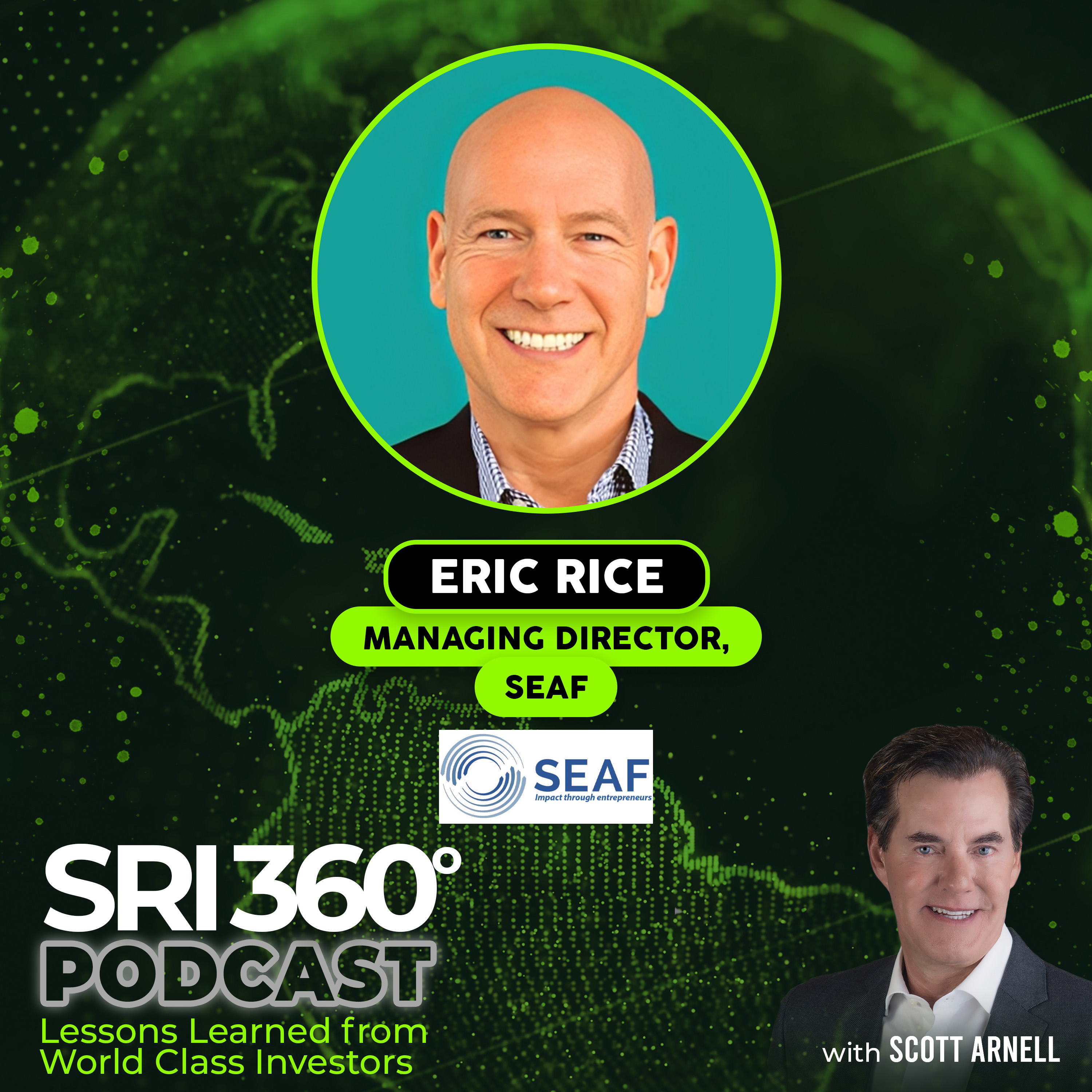
My guest today is Eric Rice – back for his second appearance on the podcast.
When we first spoke, he was running one of the only public equity funds in the impact space available to retail investors. Now, that fund has been shut down, the capital returned, and Eric has moved to private equity – specifically, to SEAF, an investor in emerging market SMEs.
This time, we talked about what happened, why it happened, and what it says about the current state of impact.
Eric’s core thesis hasn’t changed. The theory of change he developed at Wellington and BlackRock was simple: invest in companies doing socially useful work – even if they don’t realize it yet – and help them grow into that identity.
This was never ESG, and Eric is clear on the difference. ESG, he says, is about how a company operates. Impact is about what it does. “We weren’t ESG investors by any means. We were thematic investors – we only invested in companies solving social or environmental problems.”
That distinction got lost. Once the political backlash against ESG took hold, especially in the U.S., nuance didn’t matter.
Texas and a group of red states targeted a handful of BlackRock funds they deemed “too woke” to qualify for state investment. Among the six funds flagged, three were ones Eric had led. The result was that legitimate impact strategies became collateral damage in a culture war that had little to do with what those funds were actually doing.
As Eric puts it, they were “a different animal from the beginning”, but their message got hijacked.
After that, the pivot to private markets wasn’t just strategic – it was necessary.
At SEAF (Small Enterprise Assistance Funds), Eric is focused on small enterprises in emerging Europe, particularly in agriculture and food. Why? Because productivity in that sector is 40% of Western Europe’s – and no one has modernized it. Because, “It’s exciting to go to this area that was left behind.”
Eric and I talked about the limits of measurement frameworks, the role of trust in evaluating managers, and why so many funds labeled “impact” aren’t actually doing anything different. We also discussed the SDGs – whether the framework is still useful – and other core debates shaping where the industry goes next..
This conversation is about what happens when a theory of change collides with political reality. It’s about staying true to the work in an industry that often prioritizes marketing. And it’s about the shift from public markets to private ones – not because it’s easier, but because it offers more clarity, more control, and maybe even more impact.
Listen to the full story.
Listen to the episode on Apple Podcasts, Spotify, Overcast, Podcast Addict, Pocket Casts, Castbox, YouTube Music, Amazon Music, or on your favorite podcast platform. You can watch the interview on YouTube here.



What was your favorite quote or lesson from this episode? Please let me know in the comments.
SCROLL BELOW FOR LINKS AND SHOW NOTES…
ADDITIONAL RESOURCES:
Previous SRI360 interviews mentioned:
- Eric Rice (Ep. 09)
- Maya Chorengel (Ep. 50)
- Rochus Mommartz (Ep. 57)
- Rochus Mommartz (Ep. 58)
- Sir Ronald Cohen (Ep. 73)
- Hadewych Kuiper (Ep. 83)
- Michele Giddens (Ep. 85)
SHOW NOTES:
[00:00] Introduction
[03:34] Eric’s career began in the US Foreign Service
[06:12] Launching impact in public equities at Wellington
[10:38] Theory of change through company engagement
[13:40] Long-term public market investing builds trust
[17:33] ESG vs. Impact – what’s the difference?
[22:23] Backlash against ESG in the U.S. and its fallout
[32:09] Transition to SEAF and private equity focus
[38:18] Debate over real vs. inflated impact numbers
[40:45] Measurement fatigue and the need for simplicity
[45:44] Greenwashing persists, but the field is maturing
[49:23] SDGs offer goals to aim for, not steps to follow
[52:46] Final thoughts
MORE ERIC RICE QUOTES FROM THE INTERVIEW:
“You have to invest for 10 or 20 years before you can really claim that what you’re doing is producing sustainable alpha – sustainable outperformance.”
— Eric Rice
“My lesson from the BlackRock experience was: for impact investors who don’t want to have their message hijacked, or to have the firm decide it has different priorities, a narrower, focused firm is probably a safer bet.”
— Eric Rice